
by B Singh January 05, 2026 18 min read

If you’ve spent any time around cigar lounges, online cigar forums, cigar shops, or even casual cigar-smoking friends, chances are you’ve heard the word Tupperdor. It sounds funny at first, almost like a kitchen gadget trying to crash a cigar party, but don’t let the name fool you. A Tupperdor is one of the most practical, affordable, and reliable cigar storage solutions out there.

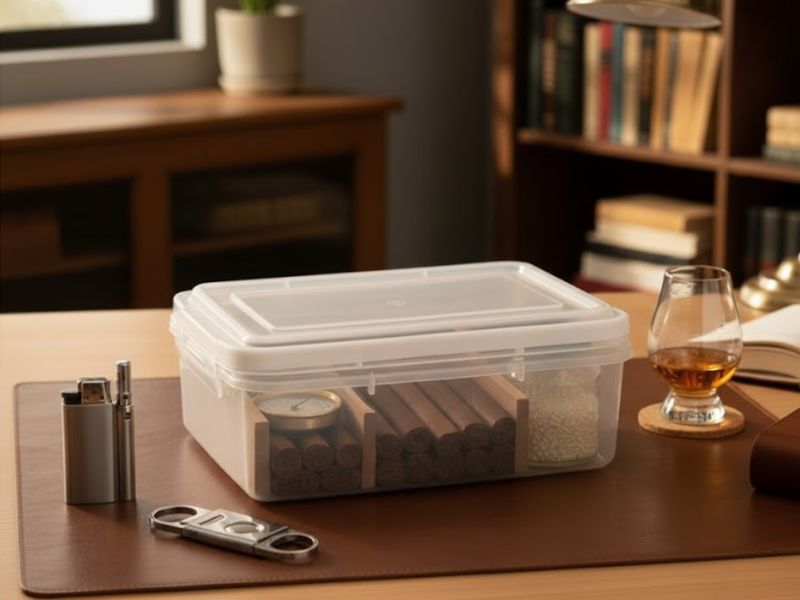
At its core, a Tupperdor is exactly what it sounds like: a humidor made from airtight Tupperware or plastic containers. Instead of relying on Spanish cedar and ornate craftsmanship, it leans into simplicity and science. Airtight plastic plus controlled humidity equals happy cigars. That’s it. No fluff, no unnecessary expense.

The beauty of the Tupperdor concept lies in its accessibility. Not everyone wants to drop hundreds of dollars on a traditional humidor, especially beginners or casual smokers. Some people live in climates where maintaining stable humidity is a nightmare. Others simply want a no-nonsense solution that works without constant babysitting. The Tupperdor answers all of these problems with surprising elegance.

In this guide, we’ll break down everything you need to know about Tupperdors—from why they work so well to how to set one up properly, maintain it long-term, and avoid common mistakes. Whether you’re brand new to cigars or a seasoned aficionado looking for a smarter storage option, this guide has you covered.

Understanding the Basics of Cigar Storage

Before diving deeper into Tupperdors, it’s important to understand why proper cigar storage matters in the first place. Cigars are living, breathing products made from natural tobacco leaves. They respond to their environment constantly, and when that environment is off, even slightly, the smoking experience suffers.

The golden rule of cigar storage is balance. Cigars need humidity to stay fresh, but too much moisture can cause mold, uneven burns, and muted flavors. Too little humidity dries them out, leading to cracking wrappers, harsh smoke, and lost complexity. The sweet spot for most cigars sits between 65% and 72% relative humidity, with 68% to 70% being the most commonly recommended range.

Temperature is just as important. Ideally, cigars should be stored between 65°F and 72°F. Higher temperatures increase the risk of tobacco beetles hatching, while lower temperatures can slow aging and affect draw quality. Stability is key and sudden changes are far more damaging than slightly imperfect conditions.

Traditional wooden humidors attempt to manage these variables using Spanish cedar, which naturally absorbs and releases moisture. However, wood is porous, reactive to environmental changes, and requires seasoning and regular maintenance. This is where plastic containers gain an edge. Plastic doesn’t breathe. It doesn’t absorb moisture. It simply holds the environment you create inside it.

Understanding these fundamentals makes it easier to appreciate why the Tupperdor works so well. It’s not about tradition or aesthetics; it’s about controlling variables. When you master humidity and temperature, everything else falls into place, no matter what container you’re using.

Keep Your Cigars Fresh

Shop All Types of Humidors From Travel Cases To Cabinets

What is a Tupperware Humidor?

A tupperdor, a portmanteau of Tupperware and humidor, is a makeshift yet highly effective cigar storage solution that uses airtight plastic containers to maintain a controlled humidity environment for cigars. While often debated among purists, the tupperdor has earned widespread acceptance due to its practicality, affordability, and proven performance.

At its core, a tupperdor replicates the essential function of a traditional humidor: protecting cigars from drying out or becoming over-humidified. Instead of relying on Spanish cedar-lined wood, it depends on airtight sealing and modern humidity control technology to achieve stability. This shift from absorption-based humidity control to containment-based control is what makes tupperdors so reliable when properly set up.

A typical tupperdor setup consists of four fundamental elements:

  • An airtight container, usually made of food-grade plastic

  • A humidification device, such as humidor packs or humidifiers

  • A digital hygrometer to monitor humidity levels

  • Optional accessories, including cedar trays, dividers, or cedar sheets

Unlike traditional humidors, a tupperdor does not “breathe.” This means humidity changes occur slowly and predictably, making it especially useful for beginners and collectors living in dry or unstable climates.

The History Behind the Tupperdor

The Tupperdor didn’t emerge from luxury cigar brands or high-end retailers. It was born in online cigar communities, where practicality often trumps tradition. Early cigar enthusiasts began experimenting with plastic containers as a budget-friendly alternative to wooden humidors, especially during cigar booms when collections outgrew storage options.

Forums like Reddit, Cigar Aficionado message boards, and independent cigar communities played a huge role in spreading the concept. Users shared photos, humidity data, and long-term results, proving that cigars stored in plastic aged just as well—sometimes better than those in expensive humidors.

The turning point came when seasoned smokers admitted something almost taboo at the time: plastic worked. And it worked exceptionally well. Once people realized that Spanish cedar wasn’t mandatory for proper cigar storage, the floodgates opened.

Over time, the Tupperdor evolved from a “cheap workaround” into a respected storage method. Even collectors with walk-in humidors now use Tupperdors for travel, cigar separation, or overflow storage. What started as a DIY hack became a legitimate tool in the cigar world.

Today, the Tupperdor stands as a perfect example of function over form. It may not look glamorous but it delivers results, and in the world of cigars, that’s what truly matters.

Why Cigar Enthusiasts Choose a Tupperdor

One of the biggest reasons cigar enthusiasts gravitate toward Tupperdors is cost. A quality traditional humidor can easily cost hundreds of dollars, while a Tupperdor setup can be assembled for a fraction of that price. For beginners, this lowers the barrier to entry significantly.

A functional tupperdor can be assembled for under $20:

  • Airtight plastic container: $8–$12

  • Boveda pack: $4–$6

  • Digital hygrometer (optional): $5–$10

This makes it one of the most cost-effective cigar storage solutions available.

Another major advantage is humidity stability. Airtight plastic containers don’t leak moisture like poorly sealed wooden humidors. Once the humidity level is set using a reliable control method, it stays consistent for weeks or even months with minimal intervention.

Convenience also plays a huge role. Tupperdors require very little maintenance. There’s no need to season the container, no wood to crack or warp, and no constant refilling of water reservoirs. For people with busy schedules, this “set it and forget it” nature is incredibly appealing.

Flexibility is another underrated benefit. You can easily dedicate different Tupperdors to different cigar types—Cuban, non-Cuban, infused, or flavored—without worrying about flavor contamination. You can also stack, store, and transport them with ease.

In short, cigar enthusiasts choose Tupperdors because they work. They’re efficient, affordable, and reliable; three things every cigar smoker can appreciate.

Tupperdor vs Traditional Humidor

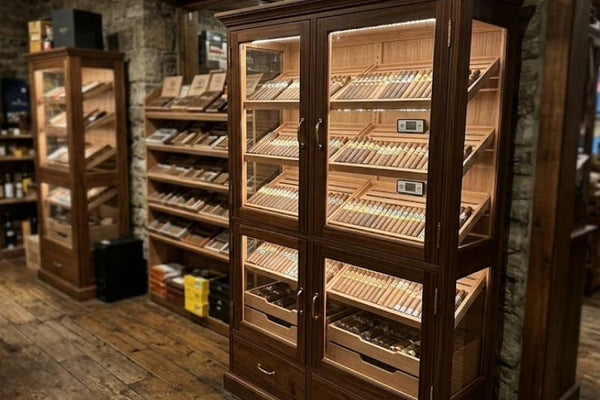
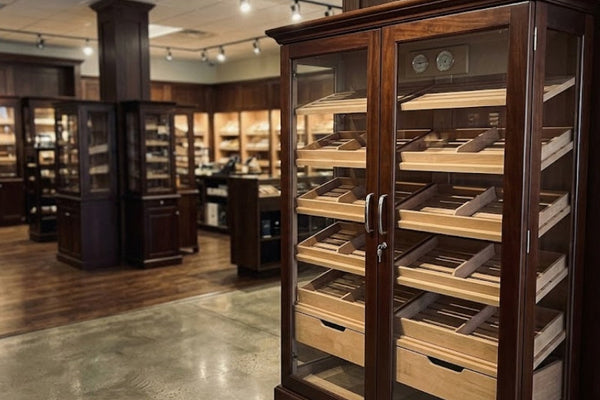
When comparing a Tupperdor to a traditional humidor, the debate often comes down to aesthetics versus performance. Traditional humidors are beautiful. They’re crafted from wood, lined with Spanish cedar, and designed to be displayed. Tupperdors, on the other hand, are utilitarian. They prioritize function over form.

From a performance standpoint, Tupperdors often win. Airtight seals mean less humidity fluctuation, which directly translates to better cigar preservation. Traditional humidors can struggle in dry climates or poorly sealed environments, requiring constant monitoring and adjustments.

Feature Tupperdor Traditional Humidor
Cost Very affordable Often expensive
Humidity Stability Excellent when sealed Depends on build quality
Aesthetic Appeal Minimal High
Customization Limited Extensive
Portability Excellent Limited
Maintenance Low Moderate to high


Both options have their place. Many experienced smokers use both simultaneously, choosing function or presentation depending on the situation.

Wooden humidors also require seasoning, a process that can be intimidating for beginners and time-consuming for experienced smokers. A Tupperdor skips this entirely. Clean it, load it, and you’re good to go.

That said, traditional humidors do offer benefits. Spanish cedar can enhance aroma, repel tobacco beetles, and contribute to a classic cigar experience. For display purposes or lounge settings, they still hold strong appeal.

Ultimately, the choice depends on priorities. If you value reliability, affordability, and ease of use, the Tupperdor is hard to beat. If aesthetics and tradition matter more, a wooden humidor might be worth the extra effort.

Balanced Downsides of Using a Tupperdor 

Despite their effectiveness, tupperdors do have limitations worth acknowledging.

Lack of aesthetic appeal

Plastic containers lack the elegance and presentation value of wooden humidors. No matter how well organized, a tupperdor will always feel utilitarian rather than luxurious.

Limited customization

Traditional humidors often include trays, drawers, and adjustable dividers. While tupperdors can be customized manually, they remain open-container systems with fewer built-in organization options.

No built-in Spanish cedar lining

Without cedar, you lose some aroma enhancement, moisture buffering, and pest resistance. These benefits can be partially restored using cedar sheets or boxes, but not fully replicated.

Scalability limits

Large collections may require multiple tupperdors, whereas a single cabinet humidor can centralize storage.

These downsides don’t negate the value of a Tupperdor. They simply define where it excels and where traditional humidors still dominate.

Keep Your Cigars Fresh

Shop All Types of Humidors From Travel Cases To Cabinets

Choosing the Right Tupperware for a Tupperdor

Not all plastic containers are created equal, and this is where many beginners make their first mistake. The success of a Tupperdor depends heavily on choosing the right Tupperware. You’re not just storing leftovers here, you’re creating a controlled microclimate for premium cigars, and that demands quality materials.

First and foremost, airtight sealing is non-negotiable. The container must have a tight-fitting lid with a rubber or silicone gasket. If air can move freely in and out, humidity stability becomes impossible. Snap-lock lids, gasket-sealed food storage containers, and high-quality Tupperware-style bins are ideal. A simple test is to close the container and gently squeeze it. If air escapes easily, keep looking.

Choosing the correct Tupperware size is critical for maintaining consistent humidity and protecting cigar integrity. A widely accepted best practice is to select a container that can hold at least twice the number of cigars you intend to store.

This extra space serves several important purposes:

  • Promotes even humidity distribution

  • Prevents cigars from pressing against each other

  • Reduces the risk of wrapper damage

  • Allows room for humidification devices and airflow

Overcrowding is one of the most common mistakes with tupperdors. Cigars need breathing room, even in an airtight environment. If space is tight, humidity may become uneven, causing some cigars to over-humidify while others dry out.

Always factor in the size of your humidity packs or humidifier, any cedar trays or boxes, and future expansion of your collection. When in doubt, go slightly larger since it’s far easier to manage excess space than insufficient space.

The sweet spot is choosing a container that’s about 70–80% full once your cigars and humidity packs are inside.

Material quality is another key factor. Look for BPA-free, food-grade plastic. These plastics are designed to be odorless and non-reactive, meaning they won’t impart unwanted smells or flavors to your cigars. Avoid thin, flexible plastics that can warp over time or absorb odors.

Shape matters, too. Rectangular containers are usually better than round ones because they allow cigars to lay flat and organized. Clear containers are popular because they let you visually inspect cigars and humidity devices without opening the lid, reducing unnecessary air exchange.

Choosing the right Tupperware might seem mundane, but it’s the foundation of a successful Tupperdor. Get this part right, and everything else becomes easier.

Essential Components of a Tupperdor

While the container itself is crucial, a Tupperdor isn’t complete without a few essential components working together. Think of it like a small ecosystem—each part plays a role in keeping your cigars fresh, flavorful, and smoke-ready.

The first must-have component is a hygrometer. This device measures the relative humidity inside your Tupperdor. Digital hygrometers are strongly recommended over analog ones due to their accuracy and ease of reading. Even an inexpensive digital model can outperform high-end analog gauges when properly calibrated.

Next comes the humidity control device. This is the heart of your Tupperdor. Most cigar smokers rely on two-way humidity control packs, such as Boveda packs, because they regulate moisture automatically. They add humidity when it’s low and absorb excess moisture when it’s high, no guesswork involved.

Dividers and trays, while optional, can significantly improve organization and airflow. Plastic dividers, cedar sheets, or even cigar boxes placed inside the Tupperdor can help separate different cigar types. This is especially useful if you’re storing cigars with different flavor profiles or strength levels.

Each component may seem small on its own, but together they create a stable, predictable environment. The beauty of a Tupperdor lies in this simplicity—fewer parts, fewer problems, and more time enjoying your cigars.

Additional Accessories You Can Use in a Tupperdor 

While a tupperdor can function perfectly with just the basics, several optional accessories can significantly improve organization, usability, and the overall cigar experience.

Spanish cedar sheets or cigar boxes are commonly added to compensate for the absence of cedar lining. Cedar naturally absorbs excess moisture, releases it gradually, enhances aroma, and helps deter tobacco beetles. When using cedar, ensure it is untreated and cigar-grade.

While not necessary for humidity control, cedar can enhance aroma and help repel tobacco beetles. Just be sure the cedar is untreated and designed specifically for cigar storage.

Spanish cedar spills, thin strips of cedar traditionally used to light cigars, can also be placed inside a tupperdor for subtle aroma benefits and light moisture regulation.

While not part of the storage system itself, many enthusiasts also keep a quality cigar cutter and torch lighter stored nearby for convenience. These tools don’t affect humidity but contribute to a seamless smoking ritual.

None of these accessories is mandatory, but they elevate the experience from basic storage to thoughtful cigar stewardship.

Best Humidity Control Options for a Tupperdor

Humidity control is where the Tupperdor truly shines, largely because plastic containers respond so well to modern humidity solutions. Unlike wooden humidors, which can absorb moisture unpredictably, a Tupperdor allows humidity devices to work exactly as designed.

There are several humidification options suitable for tupperdors, each with its own strengths.

Humidor packs (two-way humidity packs)

Boveda packs are the gold standard for Tupperdors. These two-way humidity control packs are pre-calibrated to specific humidity levels, typically ranging from 62% to 72%. For most smokers, 65% or 69% packs offer the best balance between flavor, burn quality, and draw. They require no maintenance—just replace them when they harden.

These are the most popular and beginner-friendly options. They require no maintenance, self-regulate humidity, and come in multiple RH levels (commonly 65%, 69%, and 72%). Simply place the appropriate number of packs inside the Tupperdor and replace them when they harden.

A reliable rule of thumb is one 60-gram Boveda pack for every 25 cigars.

For example:

  • 25 cigars → 1 pack

  • 50 cigars → 2 packs

Using extra packs won’t over-humidify your cigars, as Boveda packs only release moisture as needed.

Gel jars

Another popular option is humidity bead or Gel Jars, which absorb and release moisture depending on environmental conditions. While effective, they require occasional rehydration with distilled water, making them slightly more hands-on than Boveda packs.

Gel-based humidifiers release moisture gradually and can work well in larger tupperdors. They require periodic refilling with distilled water or solution and closer monitoring.

Sponge-based systems

DIY solutions, such as sponges or floral foam, are strongly discouraged. While they may seem cost-effective, they often cause humidity spikes, encourage mold growth, and require constant monitoring. The money saved upfront rarely justifies the long-term risks.

These function similarly to gel jars but tend to be less precise. They can cause humidity spikes if overfilled and are generally less recommended for airtight plastic environments.

Electronic humidifiers

Electronic humidity devices exist, but they’re usually unnecessary for Tupperdors. The airtight nature of plastic containers paired with passive two-way humidity control makes electronic solutions redundant for most users.  Battery-powered or ultrasonic humidifiers actively generate humidity and are typically unnecessary for tupperdors. They are better suited for large cabinets or walk-in humidors.

Ideal Humidity at 70%

Humidity for your cigars would usually be ideal at 70%, although this is linked to the temperature regarding the 70/70 rule, which is 70% humidity at 70°F.  Ideal cigar storage humidity levels can vary, but are almost always at or around this level.

In short, keep it simple. A properly sized Boveda pack inside an airtight container is one of the most foolproof cigar storage methods available today.  For most users, humidor packs remain the safest, cleanest, and most consistent option.

Keep Your Cigars Fresh

Shop All Types of Humidors From Travel Cases To Cabinets

Temperature Control Clarification

A tupperdor should ideally be stored between 65–70°F (18–21°C). Temperature stability is just as important as humidity, especially for long-term storage and aging.

Away from sunlight, drafts, and heat sources (Above 72°F / 22°C) 

It's best to keep the Tupperdor away from direct sunlight and heat sources as extreme temperature changes can easily affect your cigars as heat may promote mold, pests, and flavor loss.

Excessive heat increases the risk of tobacco beetles, while fluctuating temperatures can interfere with the aging process. Keep your tupperdor away from:

  • Windows and direct sunlight

  • Heating vents or radiators

  • Electronics that generate heat

Avoid temperatures too low (Below 62°F / 16°C) 

On the other hand, temperatures being too low also brings about a different set of problems, such as dryness of your cigars, condensation, and a poor burn.  Ideal temperatures would be around 65-72°F (18-22°C).

While tupperdors do not include temperature control, they perform similarly to traditional humidors in stable indoor environments. For those needing active temperature regulation, electric humidors or frigadors (temperature-controlled cigar refrigerators) may be more appropriate.

Step-by-Step Guide to Setting Up a Tupperdor

Setting up a Tupperdor is refreshingly straightforward, which is part of its appeal. Still, doing it correctly from the start ensures long-term success and peace of mind.

Start by cleaning the container thoroughly. Wash it with warm water and mild, unscented soap.

Rinse well and allow it to air dry completely. Any lingering odors can transfer to your cigars, so cleanliness matters.

Next, place your hygrometer inside and allow it to acclimate. Before trusting its readings, it’s wise to calibrate it using the salt test or a calibration kit. Accurate humidity readings are essential for monitoring your setup. 

The salt test is done in order to verify and adjust a hygrometer's accuracy by simulating a known humidity level around 75% RH.  To do it, simply place your hygrometer inside a sealed bag with a salt and water mixture in a bottle cap then leave it somewhere in room temperature and wait for 12-24 hours for the humidity to stabilize around 75%.  If it reads differently, simply adjust it to 75%. 

It's best to do this test at least a day before you need to use your hygrometer/place it in your tupperware.

Before loading your cigars, it’s best to let the closed container stabilize for 24–48 hours with the humidity device inside. This allows the internal environment to reach equilibrium, reducing stress on cigar wrappers and ensuring consistent humidity from day one.

Now, add your cigars, arranging them loosely to allow airflow. Avoid stacking them too tightly or cramming them into corners. If using dividers or cedar sheets, place them strategically to separate cigar types.

Insert your humidity control packs or Gel jar based on the size of the container and the number of cigars. Most manufacturers provide guidelines on how many packs you need. It’s better to slightly over-humidify capacity than underdo it.

Close the lid and let the environment stabilize for 24–72 hours. Resist the urge to open the container repeatedly since each opening disrupts the internal balance. Once the humidity settles into your target range, your Tupperdor is officially ready.

Is Seasoning Necessary for a Tupperdor?

One of the most common questions new users ask is whether a Tupperdor needs seasoning. The short answer is no, and this is one of its biggest advantages over traditional humidors.

Seasoning is necessary for wooden humidors because wood absorbs moisture. Plastic does not. A Tupperdor doesn’t need to be “primed” to hold humidity; it simply contains it. Attempting to season a plastic container is not only unnecessary but can actually cause problems like excessive humidity and mold.

That said, some people confuse seasoning with stabilization. While you don’t need to season a Tupperdor, you do need to allow time for the humidity to stabilize after setup. This means leaving the container closed for a day or two while the humidity control packs do their job.

Adding Spanish cedar sheets does not change this rule. Even if cedar is present, the container itself doesn’t need seasoning. The cedar will acclimate naturally over time without any intervention.

Understanding this distinction saves time, effort, and frustration. One of Tupperdor’s greatest strengths is how little preparation it requires, so embrace that simplicity.

How to Maintain a Tupperdor Long-Term

Long-term maintenance of a Tupperdor is remarkably easy, which is why so many cigar smokers swear by it. Once established, a properly set up Tupperdor can go weeks or even months with minimal attention.

Checking the hygrometer weekly

The most important habit is occasional monitoring. Check the hygrometer once every week or two to ensure humidity remains stable. As long as the container stays sealed, fluctuations should be minimal.

Maintaining proper humidity inside a tupperdor requires consistency rather than constant adjustment. The goal is to create a stable environment and disturb it as little as possible.

In addition to checking humidity readings, gently feel your cigars once a week. Properly humidified cigars should feel firm but slightly springy, not brittle or spongy.

Replacing or refilling humidification devices 

Replace humidity packs when they become stiff or dry. Depending on the climate and container size, this may happen every few months. Always keep a spare pack on hand; it’s better to swap early than risk drying out your cigars.

Cleaning the container periodically

Clean the container periodically, especially if you notice dust, tobacco flakes, or residue. Always remove cigars before cleaning, and allow the container to dry fully before reloading. 

During that period, make sure to place your cigars in a second humidor or any clean sealed container, preferably with a humidity pack.  Sealed plastic bags can be used, but it's not recommended and is only fit for very short-term use (Under an hour).

Avoiding frequent opening 

Avoid opening the Tupperdor unnecessarily. Every opening introduces fresh air and disrupts the internal environment. Think of it like a refrigerator—the less you open it, the more stable it stays.

Plastic containers respond quickly to changes, so small adjustments go a long way.  With these simple habits, a Tupperdor can preserve cigars flawlessly for years.

Common Mistakes to Avoid When Using a Tupperdor

Despite their simplicity, Tupperdors aren’t foolproof if misused. One of the most common mistakes is over-humidifying. More humidity does not mean better cigars. Excess moisture leads to tight draws, muted flavors, and mold risk.

If humidity creeps too high, you can lower it manually by temporarily removing humidification devices or cracking the lid briefly under controlled conditions.

Over-Humidification Quick Fixes (Above 70%)

  • Remove excess humidity packs

  • Briefly open the container to release moisture

  • Ensure you’re not overcrowding cigars

Of course, problems also occur with under-humidification, leading to dry or brittle cigars, bitter tastes, unraveling wrappers, and uneven burning

Under-Humidification Quick Fixes (Below 65%)

  • Add an additional humidity pack

  • Check the seal for air leaks

  • Reduce unnecessary lid openings

Small adjustments are usually enough like avoiding drastic changes that can shock cigar wrappers. Never attempt rapid humidity correction, as sudden changes stress cigar wrappers and fillers.

Another frequent error is mixing infused or flavored cigars with traditional cigars. Plastic containers trap aromas efficiently, and flavored cigars can easily contaminate others. Always store flavored cigars separately.

Using poor-quality containers is another pitfall. Thin plastics, weak seals, or reused containers with lingering food odors can ruin cigars faster than improper humidity.

Lastly, neglecting the hygrometer altogether defeats the purpose of controlled storage. Even though Tupperdors are stable, monitoring ensures problems are caught early.

Avoid these mistakes, and your Tupperdor will reward you with consistently excellent cigars.

Aging Cigars in a Tupperdor

One of the most debated topics in the cigar world is whether cigars can age properly in plastic. The answer is a confident yes, with realistic expectations.

Aging cigars is about time, stability, and humidity. A Tupperdor provides all three. What it doesn’t provide is the aromatic contribution of Spanish cedar, which some smokers believe enhances aging. However, many blind tastings have shown that cigars aged in Tupperdors develop just as smoothly and consistently.

Tupperdors are absolutely suitable for long-term cigar storage when set up correctly. With airtight sealing, consistent humidity control, and stable temperatures, cigars can be preserved and even aged for years.

While Spanish cedar-lined humidors remain the traditional gold standard for aging, modern tupperdors narrow the gap significantly. For many smokers, the difference is negligible compared to the gains in reliability and simplicity.

For short-term aging, six months to two years, a Tupperdor performs exceptionally well. For long-term aging, adding cedar sheets can bridge the gap for those who value tradition.

Flavor development still occurs. Harsh edges mellow, blends integrate, and complexity improves. The key is patience and consistency, not the material of the container.

In practical terms, many collectors age valuable cigars in Tupperdors simply because they trust the stability more than ornate wooden boxes.

Is a Tupperdor Right for You?

A Tupperdor isn’t just for beginners; it’s for anyone who values reliability. Casual smokers benefit from its simplicity, while seasoned collectors appreciate its consistency and scalability.

If you live in a dry or unpredictable climate, a Tupperdor may outperform traditional humidors. If you’re budget-conscious, it’s an easy choice. If you care more about how your cigars smoke than how your humidor looks, the decision becomes even clearer.

After all, Tupperdors are useful and convenient for a great deal of things.  It's perfect for beginners learning about the basics of cigar storage or as travel humidors due to its simplicity, durability, and portability.  And for the more experienced, Tupperdors are excellent storage for your excess cigars, or simply for separating flavored from non-flavored cigars

That said, if display and tradition are central to your enjoyment, a wooden humidor may still hold appeal. Many cigar lovers use both: traditional humidors for presentation and Tupperdors for serious storage.

The right choice is the one that fits your lifestyle, habits, and priorities.

Conclusion

The Tupperdor has earned its place in the cigar world not through marketing or tradition, but through performance. It offers unmatched humidity stability, affordability, and ease of use, making it one of the smartest cigar storage solutions available.

Whether you’re protecting a small personal stash or managing a growing collection, a Tupperware humidor delivers where it counts. Simple, effective, and surprisingly powerful, the Tupperdor proves that great cigar storage doesn’t have to be expensive or complicated—it just has to work.

If you're looking to commit more into cigar storage, here at Your Elegant Bar, we offer an excellent selection of cabinet humidors and humidor humidifiers perfect for taking care of your collection, along with air purifiers smoke eaters and cigar accessories that can make sure every smoke you take is an experience worth having

Keep Your Cigars Fresh

Shop All Types of Humidors From Travel Cases To Cabinets

Frequently Asked Questions

1. What humidity level is best for a Tupperdor?

Most smokers prefer 65%–69% relative humidity for optimal flavor and burn.

2. Can cigars get moldy in a Tupperdor?

Yes, if humidity exceeds 75% consistently. Proper humidity control prevents this.

3. Do Tupperdors affect cigar flavor?

No, as long as the container is odor-free and food-grade.

4. How long can cigars last in a Tupperdor?

Indefinitely, if humidity and temperature remain stable.

5. Should I rotate cigars inside a Tupperdor?

Occasional rotation can help with airflow, but it’s not strictly necessary.

Ben Singh
Ben Singh

Ben Singh is recognized as a trusted voice in the cigar world, known for his hands-on work with humidors, humidifiers, and smoke control solutions. Since 2015, he’s helped shape how collectors, lounges, and retailers store and protect their cigars. Ben’s design input, honest reviews, and presence at major cigar shows have earned him respect from industry pros and fellow enthusiasts alike.

Leave a comment

Comments will be approved before showing up.