

by B Singh April 06, 2026 13 min read

Summary:

  • This article compares negative pressure and neutral pressure ventilation systems for cigar lounges.
  • Key points include how each system affects smoke containment, patron comfort, and lounge air quality.
  • Readers will learn which pressure strategy works best for their lounge layout and how to implement it effectively.

Cigar lounges live or die by air quality. You can build a beautiful space, invest in premium seating, and stock world-class cigars, but if smoke control is off, the experience falls apart fast. Guests notice lingering haze, stale air, and uneven airflow immediately. That’s where pressure strategy, specifically negative vs neutral pressure, becomes the deciding factor in whether your lounge feels refined or suffocating.

We’ve worked with enough cigar shops, lounges, and hospitality spaces to see a clear pattern: most air quality issues don’t come from lack of equipment, but from misunderstanding how pressure works. At Your Elegant Bar, we guide clients through these decisions early, so their space functions properly from day one instead of becoming an expensive fix later.

Understanding Air Pressure in Cigar Lounges

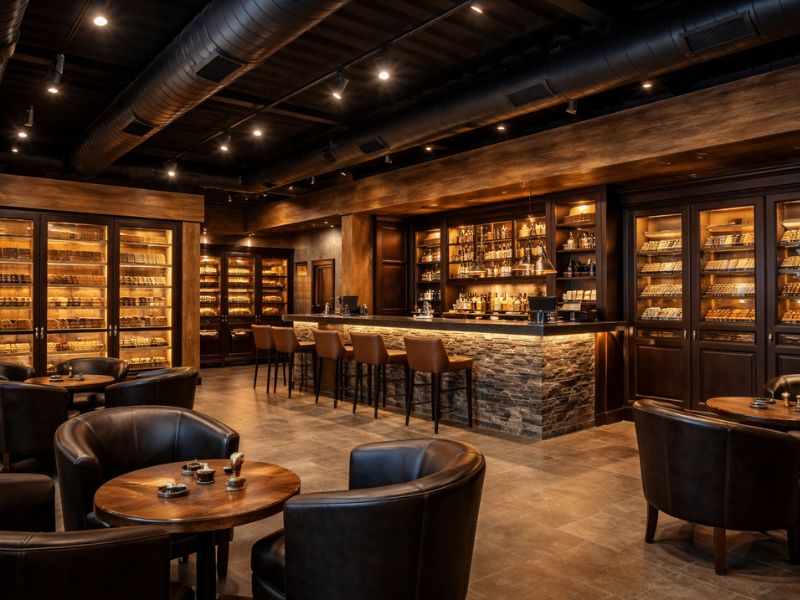
Photo Credit to our friends at Palmyra, PA at Oscar's Cigar Lounge
Thank you for choosing our Premium Cigar Lockers!

Air pressure inside a cigar lounge determines how air moves between rooms, how smoke behaves, and whether odors stay contained or spread throughout the building. This isn’t abstract HVAC theory; it directly affects customer comfort, staff conditions, and even compliance with local regulations.

In simple terms, air moves from areas of higher pressure to lower pressure. That means if your lounge has higher pressure than adjacent spaces, smoke will escape outward. If it has lower pressure, outside air will flow inward, keeping smoke contained. Neutral pressure sits somewhere in between, aiming to balance airflow so that air neither strongly enters nor exits the space.

What complicates things is that cigar smoke is heavier and more persistent than typical airborne particles. It doesn’t just dissipate quickly like steam or cooking odors. Without deliberate airflow control, it lingers, clings to surfaces, and accumulates in layers. This is why lounges require a more intentional strategy than standard ventilation systems used in restaurants or retail environments.

Another layer to consider is how pressure interacts with your smoke control system. Even the best smoke eaters or air filtration units can underperform if the room’s pressure is working against them. We’ve seen setups where expensive equipment is installed, but because the pressure is neutral or slightly positive, smoke escapes into hallways or adjacent retail areas. That’s not a filtration issue—it’s a pressure design flaw.

Pressure also affects how fresh air is introduced. Too much incoming air without proper exhaust can dilute smoke but create turbulence. Too little incoming air creates stagnation. The balance has to be intentional, not accidental.  

Airflow doesn’t just affect comfort; it can also impact how cigars hold their condition, especially in spaces connected to walk-in humidors or cigar cabinet humidors, where stable environments matter, which is why properly calibrated humidifiers play a role alongside airflow control.

Breathe Cleaner, Enjoy Better

Shop Smoke Eaters and Air Purifiers for Homes, Lounges & Shops

What Is Negative Pressure and How It Works

Negative pressure means the air pressure inside the cigar lounge is lower than the surrounding areas. Practically speaking, this is achieved by exhausting more air than you supply. The result is that air is constantly being pulled into the lounge from adjacent spaces, rather than smoke escaping outward.

This is the most widely recommended approach for cigar lounges—and for good reason. It creates a containment effect. When doors open, air rushes in instead of smoke leaking out. Hallways stay clean. Retail areas remain unaffected. Staff working outside the lounge aren’t exposed to lingering smoke.

The mechanics behind it are straightforward but need to be executed correctly. You increase exhaust capacity, typically through commercial-grade smoke eaters and dedicated ventilation, and carefully control how much fresh air is introduced. The difference doesn’t need to be extreme, but it needs to be consistent. Even a slight negative pressure differential can make a noticeable impact.

Negative Pressure has multiple advantages in maintaining the air quality of a cigar lounge, with the most notable ones being the following:

  • Keeps smoke contained within the lounge
  • Creates directional airflow toward exhaust systems
  • Improves efficiency of smoke eaters
  • Reduces odor spread to adjacent areas
  • Helps maintain cleaner surfaces over time

However, negative pressure isn’t just about installing stronger exhaust fans. If you overdo it, you can create discomfort. Doors may become harder to open, drafts can form, and temperature control can become inconsistent. This is where precision matters. The goal is controlled negative pressure, not aggressive suction.

At Your Elegant Bar, when we help design lounge environments, we focus on achieving that balance. We look at room size, seating density, ceiling height, and equipment placement to ensure the pressure works with the space instead of against it. Book a design consultation now!

What Is Neutral Pressure and When It’s Used

Neutral pressure aims to balance the amount of air entering and leaving a space so that there is no significant difference between indoor and surrounding air pressure. In theory, this creates a stable environment without strong airflow in either direction. In practice, for cigar lounges, it’s often more complicated than it sounds.

The appeal of neutral pressure is comfort. Without noticeable airflow pushing in or pulling out, the space can feel more natural. Temperature control tends to be easier to maintain, and there’s less risk of drafts or door resistance. For environments where smoke is minimal or occasional, neutral pressure can work reasonably well.

But cigar lounges are not low-smoke environments. They are high-density, continuous smoke environments. That changes everything. With neutral pressure, smoke doesn’t have a clear direction to travel. It lingers, spreads evenly, and can slowly migrate into adjacent areas, especially when doors open or foot traffic increases.

Another issue is inconsistency. Neutral pressure is extremely sensitive to external factors. A door opening, a change in HVAC operation, or even weather conditions can shift the balance slightly positive or negative. That unpredictability leads to moments where smoke escapes or accumulates unevenly.

There’s also the perception factor. Even if a neutral pressure system technically meets ventilation requirements, customers may still feel the air is “heavy” or stale. That’s because smoke isn’t being actively guided out; it’s just being diluted.

Negative vs Neutral Pressure: Key Differences That Matter

When comparing negative and neutral pressure in cigar lounges, the differences show up quickly in real-world performance. This isn’t about theory; it’s about how the space feels, smells, and functions day to day.

Feature Negative Pressure Neutral Pressure
Smoke Containment Excellent – smoke stays inside Inconsistent – can leak out
Airflow Direction Controlled and predictable No clear direction
Performance in Busy Lounges Reliable Often struggles
Comfort Level Clean, breathable air Can feel heavy or stagnant
Sensitivity to Changes Stable Easily affected by doors/HVAC
Maintenance Impact Less residue buildup More frequent cleaning needed


The most important distinction is smoke containment. Negative pressure actively prevents smoke from escaping the lounge. Neutral pressure does not. Even small pressure imbalances in a neutral setup can allow smoke to drift into adjacent areas, especially during peak hours when doors are frequently opening and closing.

Airflow direction is another major factor. Negative pressure creates a clear path for smoke to follow, from seating areas toward exhaust systems. Neutral pressure lacks that direction, which leads to more lingering smoke and uneven distribution throughout the room.

From an operational standpoint, negative pressure is more forgiving. Once properly set up, it continues to perform consistently even as conditions change. Neutral pressure requires tighter control and constant balance, which can be difficult to maintain in a busy commercial environment.

There’s also a noticeable difference in perceived air quality. Lounges with negative pressure tend to feel cleaner, even if the number of cigars being smoked is high. Customers can sit longer without discomfort. Staff can work extended shifts without fatigue from poor air circulation.

Maintenance is another area where the gap becomes clear. Negative pressure reduces the amount of smoke residue that settles on surfaces. Neutral pressure allows more buildup over time, which means more frequent cleaning and higher long-term upkeep costs.

At Your Elegant Bar, we’ve consistently seen better results with negative pressure setups, especially when paired with properly sized smoke eaters and well-planned airflow design. It’s not just about removing smoke—it’s about controlling where it goes and ensuring it leaves the space efficiently. Book your design consultation!

Breathe Cleaner, Enjoy Better

Shop Smoke Eaters and Air Purifiers for Homes, Lounges & Shops

When Negative Pressure Is the Right Choice

Negative pressure is the default recommendation for most cigar lounges, especially in commercial settings where consistency, containment, and customer comfort are non-negotiable. If your lounge is part of a larger building, attached to a retail shop, bar, restaurant, or hotel, this approach becomes even more critical. You’re not just managing smoke for the people inside the lounge, you’re protecting every adjacent space from being affected.

The moment you expect regular occupancy, multiple cigars burning at once, and continuous traffic in and out of the room, neutral pressure starts to fall short, especially in fully built-out lounges that include seating areas, retail displays, and adjoining walk-in humidors, where maintaining separation between environments is critical.  Negative pressure steps in by creating a controlled inward airflow that keeps smoke exactly where it belongs. This becomes particularly important during peak hours. Doors open frequently, people move in and out, and without that inward pull, smoke will escape. With negative pressure, it doesn’t.

Another scenario where negative pressure proves its value is in lounges offering premium experiences. When guests are paying for a high-end environment, they expect clean air—not just visually, but in how it feels to sit, breathe, and stay for extended periods. A properly balanced negative pressure system keeps the air moving, prevents stagnation, and works in tandem with filtration systems to maintain a consistently comfortable atmosphere.

At Your Elegant Bar, when we work with lounge owners planning new builds or upgrades, this is one of the first decisions we guide them through. Not because it’s complicated, but because getting it wrong leads to avoidable issues, complaints, retrofits, and unnecessary expenses. When it’s done right from the beginning, everything else, from layout to equipment, falls into place more naturally. Schedule a design consultation.

Situations Where Neutral Pressure Might Make Sense

Neutral pressure isn’t entirely off the table, but it needs to be applied with intention and realistic expectations. It works best in smaller, controlled environments where cigar use is occasional rather than constant. Think private lounges, personal cigar rooms, or low-traffic VIP areas where the number of active smokers at any given time is limited, especially smaller setups where cigar cabinet humidors or even travel humidors are the primary storage solution and usage remains limited.

In these settings, the absence of strong directional airflow can actually feel more comfortable. There’s less noticeable air movement, which some users prefer, especially in spaces designed for relaxation rather than high turnover. Temperature and humidity control can also be easier to maintain when the system isn’t constantly pulling in outside air.

However, even in these cases, neutral pressure requires careful calibration. It’s not as simple as balancing intake and exhaust and walking away. Small shifts, like opening a door or adjusting HVAC output, can tip the system slightly positive or negative. In a cigar environment, even a slight positive pressure can allow smoke to leak out, which defeats the purpose of containment.

There are also hybrid scenarios where neutral pressure is used in combination with localized negative zones. For example, a larger lounge might maintain slight negative pressure overall, while certain seating areas or adjoining rooms operate closer to neutral. This kind of setup requires precise planning and coordination between airflow design and physical layout.

How Airflow Design Impacts Pressure Performance

Pressure strategy doesn’t exist in isolation. It’s directly tied to how air moves through the space, and that’s where airflow design becomes just as important as the pressure setting itself. You can technically achieve negative pressure, but if airflow is poorly planned, the results won’t meet expectations.

The placement of supply vents and exhaust points plays a major role. Air needs to enter in a way that supports natural movement across the room, carrying smoke toward filtration and exhaust systems. If supply air is dumped randomly or exhaust points are poorly positioned, you end up with dead zones—areas where smoke lingers despite having the right pressure setup.

Ceiling height and seating layout also influence performance. In lounges with high ceilings, smoke has more vertical space to rise and spread before being captured. Without proper airflow guidance, it can accumulate above seating areas and slowly drift back down. In tighter spaces, poor airflow can lead to concentrated pockets of smoke that feel dense and uncomfortable.

Key Airflow Factors:

  • Supply vent placement
  • Exhaust location and strength
  • Ceiling height and smoke rise behavior
  • Seating layout and occupancy density
  • HVAC system integration

Another factor is integration with your existing HVAC system. Many lounges try to retrofit smoke control into systems that weren’t designed for it. That often leads to conflicts, air being pushed in one direction by HVAC while exhaust systems are trying to pull it another way. Aligning these systems is critical to making pressure work effectively.

This is where experience makes a difference. At Your Elegant Bar, we don’t just look at equipment specs; we look at how the entire space functions. We consider how people move through the lounge, where they sit, how long they stay, and how smoke will behave in those conditions. That informs where we recommend placing smoke eaters, how to balance intake and exhaust, and how to fine-tune pressure levels. Book a design consultation.

The Role of Smoke Eaters and Filtration Systems

Your Elegant Bar Air Purifier LAFC-RC2-OC Flush to Ceiling Smoke Eater

No pressure strategy works on its own. Negative pressure helps control where smoke goes, but filtration systems determine how effectively it’s removed from the air.   Just like humidifiers regulate moisture levels for proper cigar storage, air filtration systems are responsible for maintaining breathable air quality.  This is where commercial-grade smoke eaters become essential, not optional.

High-quality smoke eaters are designed to capture fine particles, odors, and gases that standard ventilation systems can’t handle on their own. In a cigar lounge, this includes everything from visible smoke to the less obvious compounds that contribute to lingering odor and stale air. When paired with negative pressure, these systems operate more efficiently because airflow is guiding smoke directly toward them.  

Another key point is placement. Even the best smoke eater won’t perform well if it’s positioned incorrectly. Units need to be placed where airflow naturally carries smoke, not where it’s convenient to install them. This ties directly back to pressure and airflow design; everything works together.

Your Elegant Bar offers a range of commercial smoke eaters that have proven effective in real lounge environments. We’ve seen firsthand how the right combination of equipment and pressure strategy transforms a space from smoky and inconsistent to clean and controlled. Schedule a design consultation!

Common Mistakes That Ruin Lounge Air Quality

Most air quality issues in cigar lounges aren’t caused by a single failure—they’re the result of small mistakes stacking up. One of the most common is assuming that installing high-end equipment automatically solves the problem. Without the right pressure and airflow strategy, even the best systems can fall short.

Another frequent issue is relying on neutral or slightly positive pressure without realizing the impact. It might seem fine during slow periods, but as soon as the lounge fills up, smoke begins to spread unpredictably. This often leads to complaints from adjacent businesses or discomfort among guests.

Improper sizing of smoke control systems is another major factor. Undersized units struggle to keep up, while oversized systems without proper airflow planning can create turbulence and uneven distribution. Both scenarios lead to inconsistent results.  Over time, poor airflow leads to residue buildup—not just on walls and furniture, but also on frequently used cigar accessories like ashtrays and lighters.

We also see problems with poor integration between HVAC and smoke control systems. When these systems aren’t aligned, they end up working against each other. Air gets pushed and pulled in conflicting directions, reducing overall efficiency and creating pockets of stagnant smoke.

Skipping professional guidance early in the process is another costly mistake. Lounge owners sometimes try to piece together solutions based on general advice, only to realize later that their setup doesn’t perform as expected. Fixing these issues after the fact is almost always more expensive and disruptive than getting it right from the start.

This is exactly where we step in. At Your Elegant Bar, we work closely with clients during the planning phase to prevent these issues before they happen. We help align pressure strategy, airflow design, and equipment selection so the final result isn’t just functional, but consistently reliable.  Book a Design Consultation Now!

Breathe Cleaner, Enjoy Better

Shop Smoke Eaters and Air Purifiers for Homes, Lounges & Shops

Frequently Asked Questions

1. What pressure level should a cigar lounge maintain for optimal performance?

Most cigar lounges should maintain a slight negative pressure, typically measured around -0.01 to -0.03 inches of water column (in. w.c.). This range is enough to contain smoke without creating discomfort like strong drafts or difficulty opening doors.

2. Can negative pressure affect temperature or humidity inside the lounge?

Yes, negative pressure can influence both temperature and humidity if not properly balanced with the HVAC system. Without controlled make-up air, it may pull in unconditioned air, which can disrupt the stability needed for both comfort and nearby humidor environments.

3. Why does smoke sometimes escape even in a neutral-pressure setup?

Neutral pressure systems are highly sensitive to small changes, such as doors opening or shifts in HVAC output. These minor fluctuations can temporarily create positive pressure, allowing smoke to escape into adjacent areas.

4. How do you measure whether a lounge is under negative or neutral pressure?

Pressure is typically measured using a manometer, which detects differences between indoor and outdoor air pressure. Professionals may also use smoke pencils or airflow tests to visually confirm the direction air is moving at doorways and vents.

5. Do smoke eaters replace the need for negative pressure?

No, smoke eaters and filtration systems work alongside pressure control, not as a replacement. Without negative pressure guiding airflow, even high-end filtration units can struggle to capture smoke efficiently before it spreads throughout the space.

Book a Design & Wholesale Consultation

For cigar lounges that see regular use, negative pressure consistently delivers better results. It contains smoke, improves airflow direction, enhances filtration performance, and creates a more comfortable environment for both guests and staff. Neutral pressure has its place, but it’s limited to specific, low-demand scenarios where the margin for error is manageable.

The difference isn’t subtle. It shows up in how the air feels, how long guests stay, and how often you deal with complaints or maintenance issues. Getting this right isn’t about overengineering—it’s about understanding how air behaves in a cigar environment and designing around it.

We’ve worked with enough lounges, retailers, and hospitality spaces to know that the best results come from aligning all the moving parts early—pressure, airflow, filtration, and layout. When those elements are working together, the space feels effortless. When they’re not, no amount of equipment can fully compensate.

If you’re planning a new lounge or upgrading an existing one, this is one decision you don’t want to guess on.

Book a Design Consultation Today!

Ben Singh
Ben Singh

Ben Singh is recognized as a trusted voice in the cigar world, known for his hands-on work with humidors, humidifiers, and smoke control solutions. Since 2015, he’s helped shape how collectors, lounges, and retailers store and protect their cigars. Ben’s design input, honest reviews, and presence at major cigar shows have earned him respect from industry pros and fellow enthusiasts alike.

Leave a comment

Comments will be approved before showing up.

A cigar humidor cabinet in a cigar lounge

6 Best Commercial Cigar Humidor Sellers in the USA (2026 Guide)

Looking for the best commercial cigar humidor sellers in the USA for 2026? Compare top suppliers by climate control, customization, warranty support, and long-term reliability for cigar lounges, retailers, and collectors.

Read More
A cigar humidor in a cigar shop

15 Best Commercial Humidors for Cigar Shops and Lounges

Choosing the right commercial cigar humidor can define how a shop or lounge presents, preserves, and sells its cigar collection. This guide compares top cabinet humidors built for retail performance, storage capacity, and premium display value.

Read More
Humidors for sale

Cigar Humidor for Sale: 10 Things to Look for Before You Buy

Looking for a cigar humidor for sale? Learn what your business should consider before buying, including capacity, humidity control, Spanish cedar construction, security features, and commercial storage requirements.

Read More