
When comparing a cigar humidor for sale, businesses should look beyond size and appearance. The right humidor protects cigar quality, supports inventory management, improves presentation, and helps create a better customer experience. For retail tobacco shops, luxury hotels, cigar lounges, and corporate gifting programs, a humidor is not just a storage product. It is an investment in preservation, brand reputation, and long-term revenue.
With so many models, sizes, and features available, selecting the right humidor can feel overwhelming. Some are designed primarily for display, while others focus on maximizing storage capacity or maintaining highly accurate climate control. Understanding the factors that matter most, from construction materials and humidity systems to scalability and maintenance requirements, can help businesses make a smarter investment that supports both daily operations and long-term growth.
Below are 10 factors businesses should evaluate when comparing cigar humidors for sale, from humidor type and construction quality to humidity control, capacity, security, and supplier support.
Why the Right Humidor Matters in a Business Environment

A humidor serves one primary purpose: maintaining stable humidity levels that preserve cigar quality. For B2B buyers, however, the stakes are often higher than they are for individual consumers. A retailer may be responsible for protecting thousands of dollars worth of inventory. A hotel lounge may depend on product freshness to maintain its reputation among guests. Corporate gift providers may need cigars to remain in excellent condition until delivery.
When humidity fluctuates excessively, cigars can dry out, crack, lose flavor, or become difficult to smoke. Excessive moisture can create equally serious issues, including mold growth and uneven burning characteristics. These problems affect customer experience and can result in product losses that quickly outweigh the initial cost of the humidor.
A well-designed humidor also supports operational efficiency. Organized storage makes inventory management easier, allows faster stock rotation, and helps staff access products without disturbing humidity levels unnecessarily. Businesses that plan for growth should view a humidor not merely as a storage box but as an investment in inventory protection and brand reputation.
1. Understanding Different Humidor Types
Before evaluating features, buyers should understand the major categories available on the market. Each serves different business needs and storage volumes.
Your Elegant Bar offers a range of cigar storage solutions for different commercial needs, including travel humidors, desktop humidors, cabinet humidors, electric humidors, walk-in humidors, and cigar lockers. Understanding how each option works can help businesses choose the right fit before they buy.
Desktop Humidors

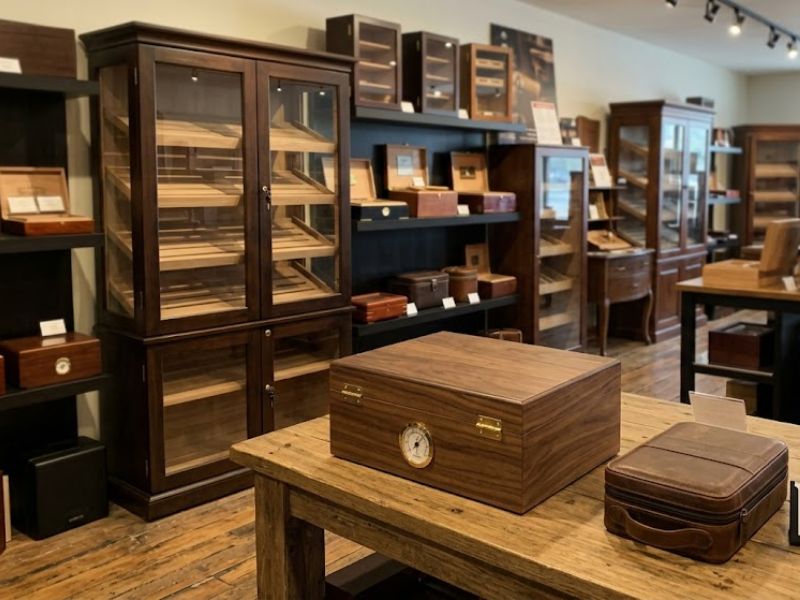
Desktop humidors are commonly used by small retailers, boutique shops, executive offices, and businesses that maintain limited cigar inventories. These units typically store anywhere from a few dozen to several hundred cigars depending on size and internal configuration.
Their compact footprint makes them attractive for display counters and reception areas. Many feature elegant wood finishes that complement upscale environments. Despite their visual appeal, buyers should carefully assess actual storage capacity rather than relying on manufacturer estimates, which are often based on smaller cigar sizes.
Cabinet Humidors

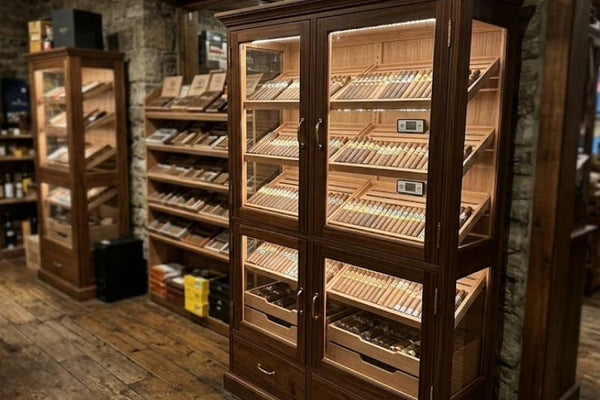
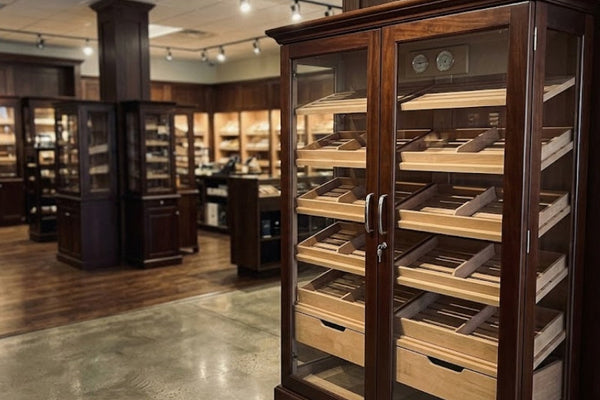
Cabinet humidors are designed for larger inventories and commercial applications. They offer significantly greater capacity and frequently include multiple shelves, drawers, and display areas.
Businesses often prefer cabinet models because they provide:
- Better inventory organization
- Higher storage capacity
- Improved humidity consistency across larger collections
- Enhanced presentation for retail environments
For growing businesses, cabinet humidors can reduce the need for frequent upgrades as inventory expands.
Electric Humidors

Electronic humidors incorporate automated climate control systems that regulate humidity and, in some cases, temperature. These units are increasingly popular among commercial users because they reduce manual monitoring requirements.
Although electronic models generally cost more upfront, they can provide greater consistency and lower maintenance demands, especially in environments where ambient conditions change throughout the year.
Walk-In Humidor

Photo credit: Oscar’s Cigar Lounge in Palmyra, PA, featuring premium cigar lockers from Your Elegant Bar
A walk-in humidor serves a very different purpose and is generally associated with larger cigar retailers, luxury lounges, and high-volume hospitality venues. Unlike cabinet or desktop models that are purchased as finished products, walk-in humidors are often custom built into the physical space itself.
For businesses carrying extensive product selections, a walk-in humidor can function as both storage and merchandising space. Customers can browse products directly within the controlled environment, which often enhances engagement and encourages purchases.
Cigar Lockers

Cigar lockers are commonly used by cigar lounges, private clubs, and hospitality venues that offer premium membership programs. Rather than serving as general inventory storage, they provide dedicated space where customers can securely store their personal cigar collections on-site under proper humidity conditions.
From a B2B perspective, cigar lockers can help lounges and private clubs add a paid member storage option while strengthening customer loyalty. They also help differentiate the lounge experience by offering convenience, exclusivity, and personalized service for regular patrons.
2. Evaluating Construction Materials
Construction quality is one of the most important factors to examine before making a purchase. A humidor's ability to maintain stable humidity depends heavily on the materials used in its construction.
Spanish cedar remains the industry standard for interior lining. This wood offers several advantages beyond aesthetics. It naturally helps regulate humidity, resists tobacco beetles, and contributes positively to the aging process of premium cigars.
When assessing construction quality, examine the following elements carefully:
- Interior lining material
- Door seal effectiveness
- Hinge durability
- Joint construction
- Shelf stability
- Overall craftsmanship
Poor construction can result in air leaks that make humidity control difficult and increase maintenance requirements. A lower purchase price may seem attractive initially, but operational costs often rise when a humidor struggles to maintain proper conditions.
3. Humidity Control Systems and Their Importance

The humidity system is the heart of any humidor. Without reliable humidity control, even the most attractive cabinet provides little value.
Traditional humidification systems often use foam or sponge based mechanisms that release moisture gradually. While effective for smaller applications, these systems may require frequent monitoring and refilling in commercial settings.
More advanced solutions include crystal based systems, advanced electric humidifiers, and integrated climate control technologies. These options generally provide greater consistency and are better suited for businesses managing larger inventories.
The target humidity range for most premium cigars falls between 65% and 72% relative humidity. Maintaining stability within this range is often more important than achieving a specific number. Frequent fluctuations can negatively affect cigar quality even when average humidity levels appear acceptable.
Business buyers should also evaluate how easy the system is to maintain. A complicated setup that requires constant attention may create unnecessary labor costs over time.
4. Choosing the Right Capacity for Future Growth

Photo credit: Oscar’s Cigar Lounge in Palmyra, PA, featuring premium cigar lockers from Your Elegant Bar
One of the most common mistakes buyers make is selecting a humidor based solely on current inventory levels. Growth can occur quickly, especially for retailers expanding product lines or hospitality venues introducing premium cigar offerings.
A useful rule is to choose a capacity that exceeds immediate needs. This approach allows room for inventory expansion while improving airflow within the humidor. Overcrowding can restrict circulation and create inconsistent humidity zones.
The following table provides a general capacity guide for common business applications:
| Business Type | Recommended Capacity |
|---|---|
| Small Office or Executive Lounge | 50 to 200 Cigars |
| Boutique Retail Store | 200 to 1,000 Cigars |
| Cigar Lounge | 1,000 to 5,000 Cigars |
| Large Retail Operation | 5,000+ Cigars |
| Hospitality and Resort Programs | Based on Seasonal Demand |
Capacity planning should account not only for storage volume but also for inventory turnover rates. Businesses with slower moving stock may require additional space to accommodate longer storage periods.
5. Display Value and Customer Experience

For many businesses, a humidor functions as both a storage solution and a merchandising tool. The visual presentation of cigars can influence purchasing decisions, particularly in retail environments where customers expect a premium experience.
Glass door cabinets, interior lighting, and organized shelving systems can enhance product visibility while maintaining appropriate storage conditions. The best display solutions balance aesthetics with performance rather than sacrificing one for the other.
At Your Elegant Bar, we often see businesses focus exclusively on appearance during the buying process. Visual appeal certainly matters, especially in luxury settings, but storage performance should remain the top priority. A beautiful display loses its value quickly if it cannot protect the products inside.
6. Temperature Management Considerations
Humidity receives most of the attention, but temperature also plays a critical role in cigar preservation. Excessive heat can accelerate aging, alter flavor characteristics, and increase the risk of tobacco beetle activity.
Commercial buyers should evaluate the environment where the humidor will operate. Retail spaces, hotel lounges, and event venues often experience temperature fluctuations throughout the day. In these situations, temperature controlled or electronic units may provide additional protection.
Many businesses discover that environmental conditions influence humidor performance just as much as the humidor itself. Understanding these factors before purchasing can help narrow the selection process and prevent operational challenges later.