
Summary:
- This article explains the distinct roles of HVAC systems and smoke eaters, and why failing to integrate them properly leads to lingering smoke and inefficient climate control in cigar lounges.
- Key points include the importance of mapping airflow before choosing equipment, matching system capacities, strategic placement of filtration units, and maintaining balanced air pressure.
- Readers will learn how to avoid common installation mistakes and coordinate these systems to create a cohesive, clean, and comfortable environment for guests without overworking the equipment.
Designing a cigar lounge or walk-in humidor isn’t just about aesthetics or storage, it’s about control. Airflow, filtration, and pressure all need to work together or you end up with stale smoke, uneven temperatures, and a system that constantly works against itself. One of the most common issues is poor integration between HVAC systems and smoke eaters. When these systems aren’t aligned, you’ll see inconsistent air quality, overworked equipment, and an uncomfortable environment for guests.
At Your Elegant Bar, we’ve worked with lounge owners, retailers, and hospitality groups across North America since 2016, helping them build cigar spaces that actually function the way they should. We’ve seen what happens when HVAC and smoke control are treated as separate systems, and we’ve helped clients correct those mistakes with practical, real-world solutions.
Our approach is straightforward: design with airflow in mind from day one, match the right equipment to the space, and make sure everything operates as one cohesive system. That’s how you maintain a clean, comfortable lounge without constant adjustments or costly fixes.
Understanding the Conflict Between HVAC and Smoke Eaters
The biggest mistake people make is assuming HVAC systems and smoke eaters serve the same purpose. They don’t. HVAC is responsible for temperature, humidity, and general air circulation. Smoke eaters, on the other hand, are designed to capture and filter contaminants like smoke particles, odors, and airborne residue. When these systems are installed without coordination, they start pulling air in different directions, which leads to inefficiency and poor performance across the board.
Think about what happens when your HVAC system is pushing conditioned air into the room while your smoke eater is aggressively pulling that same air out for filtration. You’re essentially creating a tug-of-war. The HVAC system works harder to maintain temperature and humidity, while the smoke eater cycles air too quickly or unevenly. The result is inconsistent climate control and lingering smoke in certain areas. This is especially noticeable in larger lounges or rooms with poor airflow planning.
Another issue is air short-cycling. This happens when clean air from the HVAC system gets pulled directly into the smoke eater before it has a chance to circulate through the space. Instead of cleaning smoky air, the system keeps reprocessing already clean air, which defeats the purpose of having a smoke control system in the first place. This not only reduces air quality but also increases energy costs because both systems are running harder than necessary.
To avoid this, you need to clearly define the role of each system. HVAC should maintain environmental stability, while your air quality system should be based on air purification paired with smoke eaters in a way that targets contaminated zones. Placement, airflow direction, and system capacity all need to be considered together. When done correctly, these systems complement each other and create a balanced environment where smoke is controlled without disrupting temperature or humidity.
Airflow First: Designing Around Movement, Not Equipment
Before choosing equipment, you need to understand how air will move through the space. Too many builds start with product selection instead of airflow design, which leads to expensive adjustments later. Air doesn’t just sit still; it follows paths of least resistance, and if those paths aren’t intentional, you’ll get dead zones, smoke buildup, and uneven conditions throughout the room.
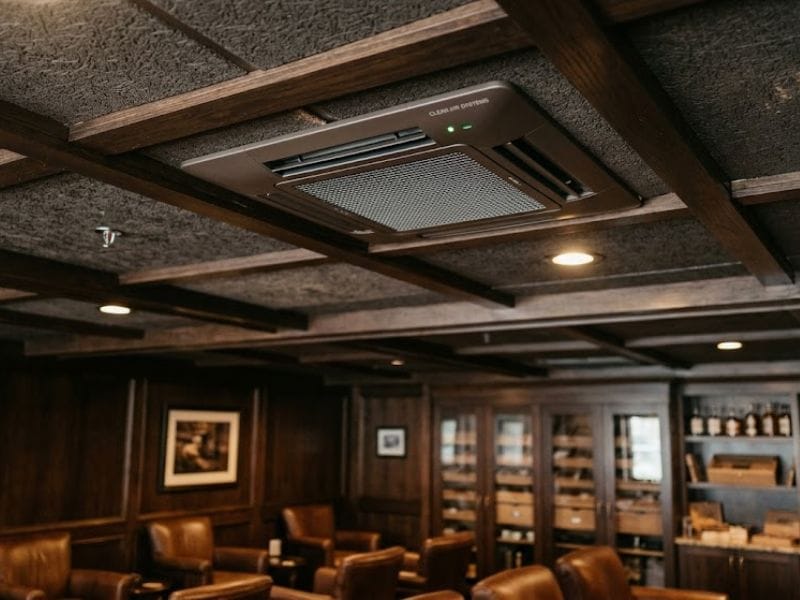
Start by identifying supply and return points for your HVAC system. These determine where air enters and exits the space. Once those are established, you can plan where smoke eaters should be positioned so they intercept contaminated air without disrupting the overall flow. Ideally, smoke is captured as it rises and spreads, not after it has already filled the room. That means placing filtration units strategically rather than simply mounting them wherever there’s space.
Ceiling height, seating layout, and even furniture placement all affect airflow. In a cigar lounge, smoke naturally rises before dispersing horizontally. If your smoke eaters are too low or positioned away from primary smoking areas, they won’t capture smoke effectively. On the other hand, if they’re too close to HVAC vents, they may interfere with conditioned airflow and create imbalances.
Here’s what a balanced airflow setup typically considers:
- Directional airflow from supply vents toward return vents
- Smoke eater placement along natural smoke paths
- Avoiding direct overlap between HVAC output and filtration intake
- Even distribution of air across the entire room
Ignoring these factors leads to constant adjustments and poor performance. Getting them right creates a system that works quietly in the background without needing constant intervention.
At Your Elegant Bar, we’ve helped clients rethink their layouts entirely once airflow was mapped properly. In several lounge projects, repositioning smoke eaters and adjusting vent placement made a bigger impact than upgrading equipment. We approach these designs by looking at how people actually use the space, where they sit, how smoke behaves in real conditions, and then aligning the system around that reality. Speak with a design consultant now!
Matching System Capacity to Your Space
Oversizing or undersizing your HVAC and smoke eaters is one of the fastest ways to create long-term problems. Bigger isn’t always better, and smaller systems will struggle to keep up. The goal is balance, where both systems are appropriately matched to the size, occupancy, and usage of the space.
A common issue is installing high-powered smoke eaters in a space with a relatively modest HVAC system. The filtration units end up cycling air faster than the HVAC system can condition it, which leads to temperature swings and humidity instability. This is especially problematic in environments where cigar cabinet humidors are present, because inconsistent conditions can affect cigar quality over time, particularly when humidifiers are working to maintain stable humidity levels within those storage systems.
On the flip side, a strong HVAC system paired with weak smoke control will maintain temperature perfectly while allowing smoke to linger. This creates a visually clean space that still smells heavy and feels uncomfortable. Guests may not always notice temperature inconsistencies, but they will absolutely notice poor air quality.
To get this right, you need to evaluate:
- Total square footage and ceiling height
- Average occupancy and smoking frequency
- Air changes per hour (ACH) requirements
- Filtration efficiency and coverage area
Here’s a simplified comparison to illustrate how imbalance affects performance:
| Scenario | HVAC Strength | Smoke Eater Strength | Result |
|---|---|---|---|
| Balanced System | Properly sized | Properly sized | Stable temp, clean air |
| Overpowered Filtration | Moderate | High | Temp fluctuations, inefficiency |
| Weak Filtration | Strong | Low | Clean temp, smoky environment |
| Undersized Both | Low | Low | Poor air quality and comfort |
Getting these numbers right from the beginning prevents costly upgrades and constant recalibration. It also ensures that your investment in both systems actually delivers the experience you’re aiming for.
Placement Strategy: Where Most Systems Go Wrong
Even with the right equipment, poor placement will undermine everything. This is where most cigar lounges run into trouble. Smoke eaters get installed based on convenience instead of airflow logic, and HVAC vents are left untouched without considering how they interact with filtration. The result is a system that technically runs, but never performs the way it should.
The key is to think in zones rather than a single open space. Every lounge has high-density smoking areas, transitional zones, and low-activity sections. Smoke eaters should be concentrated where smoke is produced, not evenly distributed just for symmetry. Mounting a unit far from seating areas might look clean from a design standpoint, but it does very little to capture smoke at the source. You want interception, not reaction.
Another common mistake is placing smoke eaters too close to HVAC supply vents. When that happens, freshly conditioned air gets pulled directly into the filtration unit before it mixes with the room air. This creates inefficiency and forces both systems to work harder. Instead, smoke eaters should be positioned along the natural path of smoke movement, usually slightly offset from primary seating areas and at a height where rising smoke can be captured effectively.
Return vents also play a role here. If your HVAC return is too strong or poorly placed, it can pull smoke across the room instead of allowing it to be filtered locally. This leads to uneven air quality, where some areas feel clean while others remain hazy. Coordinating return vent placement with smoke eater positioning ensures that air is cleaned before it exits the space, not after it has circulated everywhere.
We’ve helped clients at Your Elegant Bar correct layouts where a simple relocation of units dramatically improved performance. In one lounge, moving smoke eaters just a few feet closer to seating zones reduced visible smoke by a significant margin without upgrading equipment. These kinds of adjustments are often overlooked during initial builds but make a measurable difference in day-to-day operation. Book a design consultation now!
Coordinating Air Pressure Without Overcomplicating It
Air pressure sounds technical, but in practice, it comes down to control. You want your lounge to contain smoke without making the space feel closed off or uncomfortable. Most cigar lounges benefit from slightly negative air pressure, which keeps smoke from escaping into adjacent areas like restaurants, retail sections, or hallways.
The mistake is going too far. Excessive negative pressure can make doors harder to open, pull in unconditioned air from outside, and disrupt humidity levels, forcing humidifiers to work harder to maintain consistent conditions. This is especially important when you’re maintaining controlled environments for cigar cabinet humidors or adjacent storage areas. Too much pressure imbalance can compromise those conditions over time.
Your HVAC system is what primarily controls pressure, not the smoke eaters. Filtration units should support air cleaning, not dictate how air moves in and out of the space. If your smoke eaters are strong enough to noticeably alter pressure, they’re either oversized or improperly integrated. The goal is subtlety. You should feel comfortable in the space without noticing the mechanics behind it.
A practical way to approach this is:
- Use HVAC to establish slight negative pressure
- Ensure adequate fresh air intake to replace exhausted air
- Let smoke eaters clean air within the room, not push it out
- Monitor how doors, airflow, and temperature behave in real conditions
Pressure issues often reveal themselves quickly. Doors that slam shut or resist opening, drafts near entry points, or fluctuating temperatures are all signs something is off. Addressing these early prevents long-term inefficiencies and keeps the environment stable for both guests and stored cigars.
Integrating Filtration With the Overall Experience
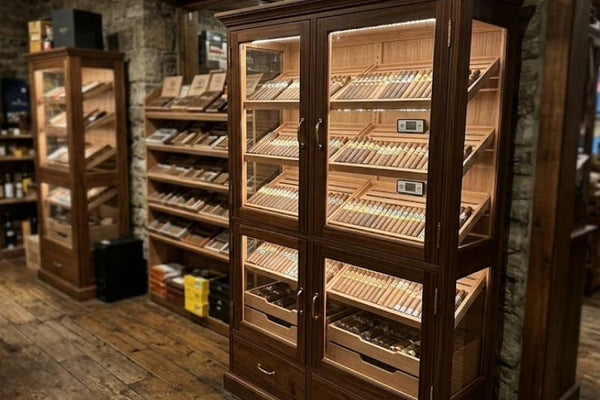
Photo Credit to our friends at Palmyra, PA at Oscar's Cigar Lounge
Thank you for choosing our Premium Cigar Lockers!
Air quality isn’t just a technical requirement; it directly affects how people experience your lounge. A space can look beautiful, have premium finishes, and offer top-tier cigars, but if the air feels heavy or stale, people won’t stay long. Integration between HVAC and filtration should enhance comfort without drawing attention to itself.
Noise is one of the biggest overlooked factors. High-powered smoke eaters can become disruptive if they’re constantly running at full capacity. When systems are properly balanced, units don’t need to work as hard, which keeps noise levels down and creates a more relaxed environment. This is especially important in lounges where conversation and ambiance matter just as much as the cigars themselves.
Consistency is another factor. Guests should experience the same level of comfort whether they’re seated near the entrance or in the back corner. Uneven airflow or poorly placed filtration creates noticeable differences across the room. This inconsistency can make certain areas less desirable, which affects how the space is used.
Beyond comfort, integration also protects your investment. Clean air reduces residue buildup on surfaces, furniture, and accessories like lighters, cutters, and ashtrays. Over time, this means less maintenance and a cleaner overall presentation. It also helps preserve the integrity of your space, especially in high-end lounges where appearance plays a major role.
At Your Elegant Bar, we’ve worked with clients who initially focused only on aesthetics, only to realize later that air quality was just as important to the overall experience. By aligning HVAC and filtration properly, we’ve helped transform spaces into environments where people can actually relax, stay longer, and enjoy their cigars without distraction. Speak with a design consultant now!
Common Integration Mistakes to Avoid
A lot of costly problems come from a handful of repeat mistakes. These aren’t complex technical failures, they’re planning oversights that compound over time. Avoiding them early saves money, time, and frustration.
Here are the most common issues we see:
- Installing HVAC and smoke eaters independently without a unified plan
- Oversizing filtration units without adjusting HVAC capacity
- Ignoring airflow direction when placing equipment
- Relying on filtration to fix poor ventilation design
- Failing to test the system under real operating conditions
Each of these creates a ripple effect. For example, relying too heavily on smoke eaters to compensate for poor ventilation leads to overworked units and inconsistent air quality. Similarly, ignoring airflow direction results in dead zones where smoke lingers despite having high-end equipment installed.
Testing is often skipped but is critical. A system might look perfect on paper but behave differently once people are in the space and cigars are actively being smoked. Real-world testing allows you to fine-tune placement, airflow, and system settings before issues become permanent.
We’ve helped clients at Your Elegant Bar troubleshoot setups where everything seemed correct during installation but failed under actual use. In many cases, small adjustments made after testing delivered better results than major equipment changes. That’s why integration should always include a real-use evaluation phase. Book a design consultation now!
Frequently Asked Questions
1. How do I know if my HVAC and smoke eater systems are working against each other?
If you notice uneven temperatures, lingering smoke in certain areas, or systems running constantly without improving air quality, there’s likely a conflict. Another sign is when clean air seems to get pulled directly into filtration units instead of circulating through the space. These issues usually point to poor placement or mismatched system capacity.
2. Can smoke eaters replace the need for proper HVAC design in a cigar lounge?
No, smoke eaters are not a substitute for HVAC. They are designed to filter air, not control temperature, humidity, or fresh air exchange. Without a properly designed HVAC system, smoke eaters will end up overcompensating and still fail to deliver consistent results.
3. What is the ideal placement height for smoke eaters in a cigar lounge?
Smoke eaters should generally be installed at a height where they can capture rising smoke effectively, often above seating areas but not directly at the ceiling unless designed for it. Placement should follow natural smoke movement rather than arbitrary mounting points. Positioning them too high or too far from smoking zones reduces their efficiency significantly.
4. How does air pressure impact cigar storage and lounge comfort?
Improper air pressure can disrupt humidity levels, making it harder to maintain stable conditions for cigars. Too much negative pressure can pull in outside air, affecting both comfort and the performance of humidification systems. Balanced pressure ensures smoke stays contained without compromising the indoor environment.
5. Is it possible to fix a poorly integrated system without starting over?
Yes, in many cases you can improve performance by repositioning smoke eaters, adjusting airflow, or recalibrating system settings. Full system replacements are rarely the first step unless the equipment is severely mismatched. A proper evaluation often reveals that small changes can deliver significant improvements.
Book a Design & Wholesale Consultation
Every cigar lounge, retail space, or walk-in humidor has its own set of variables. Ceiling height, layout, occupancy, and even how people move through the space all influence how air behaves. That’s why a one-size-fits-all approach rarely works. What you need is a system designed specifically for your space, with each component selected and positioned to support the others.
At Your Elegant Bar, we take a practical approach to solving these challenges. We’ve helped collectors, lounge owners, and businesses across North America create cigar environments that are clean, controlled, and built for real-world use. From selecting the right smoke eaters to coordinating with HVAC design and humidity control, we focus on making sure everything works together the way it should.
If you’re planning a new space or trying to fix an existing one, we can help you get there without unnecessary complications. Speak with a design consultant today!