

by B Singh May 04, 2026 14 min read

Summary:

  • Commercial humidor cabinet pricing depends on more than size alone, with materials, craftsmanship, humidification technology, airflow design, customization, delivery, and installation all shaping the final cost.
  • A quality cabinet protects cigar inventory by maintaining stable humidity, reducing product loss, improving presentation, and supporting long-term business reliability.
  • Buyers will learn which upgrades are worth paying for, which costs are often overlooked, and how to budget for a commercial humidor that balances performance, appearance, and return on investment.

Commercial cigar humidors do more than store cigars: they control aging, preserve flavor, and directly influence how customers perceive quality the moment they walk in. Pricing, however, can vary widely. You might see a smaller cabinet priced in the low thousands, while larger, custom-built units climb well into five figures. That gap isn’t random. It comes down to materials, construction methods, technology, capacity, and how the unit integrates into a broader business environment.

Your Elegant Bar has worked with a wide range of clients across North America, from first-time shop owners to established lounges refining their setup. Over the years, we’ve helped shape cigar storage solutions that not only protect inventory but also elevate presentation and usability. That hands-on experience gives us a clear view of what actually drives cost and, more importantly, what is worth investing in versus what can be scaled based on your goals and budget.

Here's a quick reference table:

Feature Upgrade Estimated Cost Increase Why the price jumps?
Full Spanish Cedar Lining +$500 – $1,200 Cost of raw timber and specialized kiln drying.
Tempered UV-Protected Glass +$200 – $450 Specialized coating to prevent cigar "fading" and heat.
Electronic Humidification +$400 – $1,500 Sensors, automated reservoirs, and wiring.
LED Interior Lighting +$150 – $400 Heat-shielded wiring to protect against humidity levels.


Understanding the Real Price Range of Commercial Humidors

Commercial cigar humidor cabinets can vary widely in price, and that range often confuses buyers who are trying to budget for a retail space or lounge. At the low end, smaller commercial-grade cabinets may start around $1,500 to $3,000, while mid-range units commonly land between $4,000 and $10,000. High-end or fully customized installations can easily exceed $15,000 and climb well beyond that depending on size, materials, and integrated systems. The key point is that pricing is not arbitrary. It reflects a combination of craftsmanship, performance, longevity, and how well the unit supports proper cigar aging conditions over time.

What drives that variation comes down to a few core elements:

  • Build quality is one of the biggest factors, particularly the type of wood used and how the cabinet is constructed. Spanish cedar interiors, tight sealing, and precise joinery all increase cost but directly impact humidity stability and cigar preservation.
  • Size also matters, but not just in terms of capacity. Larger units require more advanced airflow design and stronger humidification systems to maintain consistency across all shelves. That added engineering pushes prices higher in a meaningful way.

There is also a clear difference between mass-produced units and purpose-built commercial cabinets. Lower-cost options may look appealing upfront, but they often cut corners on sealing, airflow, and humidity distribution. That leads to uneven conditions, which can damage inventory over time. Spending more upfront on a well-built humidor cabinet often reduces losses, maintenance headaches, and customer complaints. When evaluating cost, it helps to think beyond the purchase price and consider how the unit performs over years of daily use.

At Your Elegant Bar, we have worked with retailers and lounge owners who initially leaned toward lower-cost commercial humidors but quickly realized the long-term limitations. We guide you through these pricing tiers with a focus on how each option performs in real-world conditions, helping you invest in solutions that protect cigars and support your business without unnecessary overspending. Speak with our design specialist!

Materials and Craftsmanship: Where Quality Becomes Cost

The materials used in a commercial humidor are one of the most important cost drivers, and they directly influence how well the unit performs. Spanish cedar is widely considered the gold standard for humidor interiors, and for good reason. It regulates humidity, resists mold, and enhances the aging process of cigars. Humidor cabinets that use genuine, thick Spanish cedar lining cost more because the material itself is expensive and requires skilled handling during construction. Cheaper alternatives may use veneers or substitute woods, which can compromise performance over time.

Exterior materials also play a role in pricing. Solid hardwoods like mahogany or oak increase durability and visual appeal, especially in retail environments where presentation matters. Laminates and engineered woods reduce cost but may not hold up as well under constant opening and closing. The finish, detailing, and hardware all add to the final price. Soft-close hinges, tempered glass, and reinforced shelving systems are not just aesthetic upgrades. They improve usability and longevity in high-traffic commercial settings.

Craftsmanship is where the gap between budget and premium cabinets becomes obvious. Precision sealing is critical for maintaining stable humidity levels, and that requires tight tolerances in construction. Poorly built doors or seams can lead to constant humidity fluctuations, forcing the system to work harder and increasing maintenance. Skilled craftsmanship ensures that the humidor cabinet holds its environment consistently, which is essential for preserving cigar quality.

Another factor is how the cigar cabinet is assembled and tested before delivery. High-quality manufacturers will condition and test units to ensure proper performance, which adds to production costs but reduces issues after installation. This level of attention is often missing in lower-priced units, where quality control is minimal.

Size, Capacity, and Configuration Choices

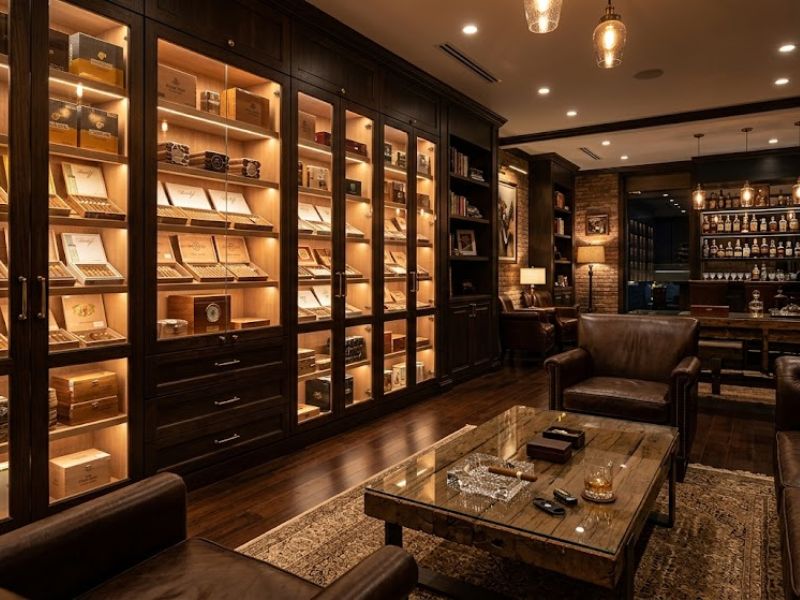
Photo Credit to our friends at Palmyra, PA at Oscar's Cigar Lounge
Thank you for choosing our Premium Cigar Lockers!

Size is one of the most visible factors affecting price, but it is not just about how many cigars a cabinet can hold. Larger humidors require more advanced internal design to maintain consistent humidity across all areas. Without proper airflow and spacing, larger cabinets can develop microclimates where some cigars are over-humidified while others dry out. That added engineering increases both complexity and cost, especially in commercial environments where consistency is critical.

Capacity also ties directly into how the humidor cabinet is configured. Adjustable shelving, drawer systems, and display angles all influence usability and pricing. Retail environments often require a balance between storage and presentation, which means incorporating display-friendly layouts without compromising airflow. That customization adds to the cost but can significantly improve sales by making products more accessible and visually appealing to customers.

A standard commercial cabinet averages about $1.50 – $2.50 per cigar of capacity. Once you move into custom-built units with active airflow, that cost can jump to $4.00+ per cigar of capacity because the engineering required to keep 7,000 cigars fresh is exponentially harder than keeping 500 fresh.

Here is a general comparison of how size and configuration impact pricing:

Cabinet Type Typical Capacity Price Range Key Cost Drivers
Small Commercial Cabinet 500-1,000 cigars $400-$2,000+ Basic humidification, limited customization
Mid-Size Cabinet 1,000-3,000 cigars $700-$3,500+ Better airflow design, higher-quality materials
Large Display Cabinet 3,000-7,000 cigars $2,000-$6,000+ Advanced humidity systems, display integration
Custom Commercial Unit 7,000+ cigars $5,000-$20,000+ Fully tailored design, premium materials, integrated systems

Note: Prices vary between Budget, Electric, and Premium/Luxury model cabinet humidors.

Configuration choices can also include locking systems and lighting elements. LED lighting, for example, adds cost but improves visibility and enhances the customer experience. Each of these additions contributes to the overall price but can also create new revenue opportunities.

Another important consideration is how the cabinet fits into the broader space, as they often work alongside walk-in humidors or dedicated storage rooms in larger operations. The cabinet may serve as a front-facing display while bulk inventory is stored elsewhere, which influences how much capacity is actually needed in the cabinet itself.

Alongside traditional retail display cabinets, cigar lockers often come into play when a space needs to balance retail presentation with member storage, allowing clients to securely store personal collections while the main cabinet remains focused on display and sales flow. This combination helps maximize space efficiency in lounges and clubs where both visibility and long-term storage need to coexist without compromising humidity consistency.

Your Elegant bar will help you think through these configuration decisions carefully. We look at how the humidor cabinet will be used day-to-day, how inventory will move, and how customers will interact with the display. That approach allows us to recommend sizes and layouts that make sense operationally, rather than simply upselling larger or more expensive units. Book a design consultation now!

Humidification Systems and Environmental Control

One of the most misunderstood pricing factors in commercial cigar cabinet humidors is the humidification system. Many buyers assume it is a minor component, but it is actually one of the most critical and cost-sensitive parts of the entire setup. A basic passive system may work in small or low-traffic environments, but commercial settings demand active, controlled humidification that can respond to constant door openings, changing room conditions, and fluctuating inventory levels. That level of performance requires more advanced equipment, which directly increases cost.

Electronic humidification systems with digital controls, sensors, and automated water management are typically found in mid to high-end cabinets. These systems maintain a consistent relative humidity level, usually between 65% and 72%, with minimal manual intervention. More importantly, they distribute moisture evenly throughout the cabinet, preventing dry pockets or over-saturated zones. Cheaper systems often struggle with this, leading to uneven cigar quality and potential product loss. When evaluating pricing, it is not just about whether a system adds humidity, but how precisely and consistently it does so.

As systems become more advanced, electric humidor cabinets naturally extend this level of control by integrating humidity regulation directly into the cabinet itself, rather than treating it as an external add-on. This creates a more stable internal environment because airflow, moisture delivery, and monitoring all operate as one coordinated system, which is especially important in commercial settings where conditions shift constantly throughout the day.

Environmental control also extends beyond humidity. Temperature stability plays a role, especially in spaces that are not climate-controlled. While most cabinet humidors rely on the surrounding room temperature, higher-end units may include insulation or even integrated cooling options. These features increase upfront cost but can be essential in warmer climates or busy retail environments where heat buildup becomes an issue. Without proper control, cigars can age too quickly or develop structural issues.  This becomes even more important in spaces designed around neutral and negative air pressure, where airflow direction and exhaust control influence how air circulates around cigar storage areas. If not properly balanced, these conditions can subtly impact humidity stability inside cabinet humidors over time.

Another layer to consider is how the humidor interacts with overall air quality. In many cigar lounges or retail spaces, air purification paired with smoke eaters is used to maintain a clean and comfortable environment. While this is not part of the cabinet itself, it directly affects how hard the humidor system has to work. Poor air quality or inconsistent airflow in the room can disrupt humidity levels inside the cabinet, making a more advanced system necessary.

At Your Elegant Bar, we have seen firsthand how the right humidification setup can make or break a commercial humidor. We will work closely with you to match systems to your environment, ensuring that cigar cabinets perform reliably under real-world conditions rather than just ideal scenarios. This approach helps avoid overspending on unnecessary features while still securing the level of control needed for consistent cigar quality. Speak with our design consultant!

Customization, Branding, and Aesthetic Upgrades

Customization is where pricing can escalate quickly, but it is also where a commercial humidor starts to become part of the brand rather than just a storage unit. For retail stores and lounges, the humidor cabinet is often a focal point. It influences how customers perceive the space and how they interact with the product. Custom finishes, engraved logos, unique layouts, and integrated lighting all contribute to that experience, and each of these elements adds to the final cost.

Branding is a common request, especially for businesses looking to create a cohesive identity. This can include etched glass, custom color matching, or even built-in signage. While these features are not essential for functionality, they can enhance the perceived value of the cigars being sold. Customers are more likely to trust and engage with a cigar display that looks intentional and professionally designed. That said, it is important to balance aesthetics with performance. A visually impressive humidor cabinet that lacks proper sealing or airflow will ultimately create more problems than it solves.

Customization can also extend to functionality. Some businesses opt for modular shelving, sliding trays, or hybrid storage and display configurations. These features allow for better organization and easier restocking, which can improve day-to-day operations. However, each layer of customization increases manufacturing complexity and cost. It is important to prioritize features that align with how the space will actually be used.

That same attention to presentation often extends beyond the humidor cabinet itself, especially in retail settings where the surrounding display plays a role in how customers engage with the product. Well-placed accessories like ashtrays, cutters, and lighters can complement the humidor and create a more complete, ready-to-enjoy buying experience. When positioned correctly, these items not only support sales but also reinforce the overall look and feel of the space without disrupting the flow of the display.

Installation, Logistics, and Hidden Costs

The listed price of a commercial humidor is only part of the total investment. Installation, shipping, and site preparation can add significant costs that are often overlooked during initial planning. Large cabinet humidors are heavy, delicate, and require careful handling. Freight shipping, white-glove delivery, and placement within the space can all increase the overall expense, especially for multi-unit installations or locations with limited access.

  • Residential/Curbside Delivery: $150-$300.

  • White-Glove Inside Delivery: $450-$900 (especially for units weighing 300+ lbs).

  • Annual Maintenance Kit: ~$100-$250 (Replacement filters, distilled water systems, and sensor calibration).

Site readiness is another factor that influences cost. The floor must be level and capable of supporting the weight of the cabinet, particularly for larger units. Electrical access is often required for advanced humidification systems and lighting. If the lounge doesn't have an outlet exactly where the humidor is going, a commercial electrician will charge roughly $250–$500 to drop a new line. In many commercial setups, proper installation also ties into broader smoke control system design, since airflow management in the room can directly affect how stable a humidor cabinet performs. Poorly balanced ventilation can disrupt humidity consistency and force additional adjustments to maintain ideal storage conditions.

Seasoning a large commercial humidor takes time and distilled water or specialized solutions. Budget roughly $50–$100 just for the initial setup chemicals and calibration tools.

There are also ongoing costs to consider. Maintenance, replacement parts, and periodic servicing of humidification systems should be factored into the long-term investment. While high-quality cabinets tend to require less frequent maintenance, no system is completely maintenance-free. Planning for these costs upfront helps avoid surprises later and ensures that the humidor continues to perform as expected.

Another hidden cost is inefficiency. A poorly designed or improperly sized cabinet humidor can lead to wasted space, inconsistent humidity, and even product loss. These issues may not show up immediately, but they can impact profitability over time. Spending more upfront on a well-designed system often reduces these hidden costs, making it a more economical choice in the long run.

Your Elegant Bar helps account for these logistical and operational factors early in the process. By looking beyond the base price of the commercial humidor, we ensure that the full scope of the investment is understood and properly planned. This approach minimizes unexpected expenses and helps create a smoother installation experience from start to finish. Talk with our design specialist today!

What’s Actually Worth Paying For

Not every upgrade or feature justifies its cost, so the key is knowing where to invest and where to hold back. The most valuable investments are those that directly impact cigar preservation and day-to-day usability. High-quality sealing, reliable humidification, and durable construction should always be prioritized. These elements form the foundation of a functional humidor and have the greatest influence on long-term performance.

Spending more on premium interior materials like Spanish cedar is also worthwhile. It contributes to stable humidity, enhances aging, and reduces the risk of mold or odor issues. Similarly, investing in a well-designed airflow system ensures that all cigars within the cabinet are kept in consistent conditions. These are not visible features, but they are critical to maintaining product quality.

On the other hand, some upgrades are more situational. Custom branding, high-end finishes, and elaborate lighting can be valuable in certain retail environments but may not be necessary for every business. The decision should be based on how much those features contribute to customer experience and sales. If they do not provide a clear return, it may be better to allocate that budget elsewhere.

Here is a quick breakdown of where to prioritize spending:

Worth the investment

  • Precision humidification systems
  • High-quality sealing and construction
  • Spanish cedar interiors
  • Efficient airflow design

Situational upgrades

  • Custom branding and finishes
  • Advanced lighting systems
  • Specialized storage configurations

Understanding this distinction helps prevent overspending while still ensuring that the commercial humidor performs at a high level. The goal is to build a system that supports the business, not just one that looks impressive.

The Price of Quality: A Side-by-Side Comparison

When looking at two cabinets that both hold roughly 2,000 cigars, the price gap can be startling. Here is exactly what those extra dollars are buying you:

Feature "Entry-Level" Commercial ($1,800-$2,500) "Pro-Lounge" Investment ($4,500-$7,000+) Price Impact
Interior Lining Spanish Cedar Veneer (thin layer over MDF) Solid 3/4" Thick Spanish Cedar Planks +$800-$1,500
Humidification Passive or Basic Fan-based unit Fully Integrated Active System with digital sensors +$600-$1,200
Sealing Standard door gaskets (refrigerator style) Multi-point compression seals and precision joinery +$400-$700
Airflow Single-zone fan (risk of "dead zones") Managed Air Circulation (multi-level ducting) +$500-$900
Glass Standard Tempered Glass UV-Filtered, Thermal-Pane Glass +$300-$500


At Your Elegant Bar, we focus on helping you invest in the features that truly matter. We have worked with a wide range of businesses, and we bring that experience into every recommendation, ensuring that each dollar spent contributes to performance, reliability, and overall success. Speak with a design consultant now!

Frequently Asked Questions

1. What factors have the biggest impact on commercial humidor cabinet pricing?

The biggest pricing drivers are materials, humidification systems, size, and craftsmanship. Spanish cedar interiors, precision sealing, and advanced electronic humidity control significantly increase cost because they directly affect cigar preservation. Customization and installation requirements also add to the final investment.

2. Are electric humidor cabinets worth the higher cost compared to standard systems?

Electric humidor cabinets are worth the investment in high-traffic commercial environments because they maintain more consistent internal conditions with less manual adjustment. They reduce fluctuations caused by frequent door openings and changing room conditions. This consistency helps protect inventory quality and reduces long-term product loss.

3. How do cigar cabinet humidors differ from walk-in humidors in cost and function?

Cigar cabinet humidors are self-contained units designed for display and moderate storage, while walk-in humidors are full-room environments with more complex construction and climate control systems. Cabinets are more cost-efficient and easier to install, making them ideal for retail counters and lounge displays. Walk-ins require structural planning and higher upfront investment due to scale and infrastructure.

4. Where do cigar lockers fit into a commercial lounge setup?

Cigar lockers are typically used for member-based storage within lounges, allowing individuals to securely store personal collections under controlled humidity conditions. They operate alongside display cabinets rather than replacing them, supporting a dual-purpose environment of retail sales and private storage. This setup improves space efficiency and enhances customer retention.

5. What should be prioritized when choosing a commercial humidor cabinet?

The priority should always be stable humidity control, airtight construction, and reliable airflow distribution. These core elements ensure cigars remain properly aged and protected over time. Aesthetic upgrades and customization should come after performance fundamentals are secured to avoid overspending on non-essential features.

The Bottom Line: Calculating Your Return on Investment

When evaluating the cost of a commercial humidor, the most expensive unit is often the one that fails to protect its contents. If a mid-range cabinet costs $5,000 but prevents just 5% of your inventory from drying out or molding over a year, it effectively pays for itself within the first 12 to 18 months.

Cost of Failure vs. Cost of Quality

  • Budget Risk: A $2,000 unit with poor sealing can lead to "micro-climates." In a cabinet holding 2,000 cigars at an average retail price of $15 each, losing just one box of premium sticks due to uneven humidity is a $300+ loss.
  • Premium Advantage: A $6,000 unit with active airflow and solid Spanish cedar ensures that the cigar at the bottom-left corner is as fresh as the one at the top-right. You aren't just paying for wood and glass; you are paying for inventory insurance.

Final Budgeting Checklist

Before you sign off on a purchase, ensure your budget accounts for the "Total Final Price":

  1. Base Unit Cost: $__________

  2. Add-ons (Lighting/Lockers/Branding): +$__________

  3. Logistics (Shipping & White-Glove): +$__________

  4. Site Prep (Electrical & Leveling): +$__________

  5. Operating Buffer (First 6 months of filters/solution): +$__________

Making the Right Call with Your Elegant Bar

The goal isn’t to spend the most; it’s to spend enough to eliminate the variables that kill cigars. At Your Elegant Bar, we specialize in finding that "sweet spot" where the craftsmanship meets your specific business scale. By choosing a unit that balances upfront cost with long-term durability, you ensure that your cigars and your reputation remain in peak condition.

If you don't want to look any further, feel free to browse our collection of cigar humidor cabinetshumidifierssmoke eaters, and essential cigar accessories. By combining storage, environmental control, and finishing details in one place, we make it easier to build complete cigar spaces that are both functional and cost-efficient without unnecessary complexity.

Ben Singh
Ben Singh

Ben Singh is recognized as a trusted voice in the cigar world, known for his hands-on work with humidors, humidifiers, and smoke control solutions. Since 2015, he’s helped shape how collectors, lounges, and retailers store and protect their cigars. Ben’s design input, honest reviews, and presence at major cigar shows have earned him respect from industry pros and fellow enthusiasts alike.

Leave a comment

Comments will be approved before showing up.

Wholesale Cigar Humidors: What Retailers Need to Know

Wholesale Cigar Humidors: What Retailers Need to Know

Wholesale cigar humidors offer retailers an opportunity to boost revenue, improve cigar preservation, and elevate the customer experience. Learn how to choose the right distributor, explore branding and financing options, and invest in display solutions that support long-term business growth.

Read More
Where to Buy a Commercial Cigar Humidor: The B2B Guide for Shop Owners

Where to Buy a Commercial Cigar Humidor: The B2B Guide for Shop Owners

Looking for the right commercial cigar humidor for your cigar shop or lounge? This guide covers where to buy, what questions to ask, red flags to avoid, and why buying direct from an experienced supplier can make a major difference for long-term performance and reliability.

Read More
Cabinet humidors in a warehouse

Why Your Commercial Cigar Business Needs a Value-Added Wholesale Distributor

Learn the differences between commercial cigar humidor suppliers, distributors, manufacturers, and wholesale partners, including how each affects pricing, customization, project support, and long-term success for cigar lounges and retail shops.

Read More