Summary:
- This article explains who should build a walk-in humidor and when it makes sense to choose a professional builder, DIY approach, or hybrid solution.
- Key points include the importance of proper sealing, insulation, vapor barriers, airflow, humidification systems, and material installation for maintaining stable cigar storage conditions.
- Readers will learn how to evaluate project size, budget, usage, hidden costs, and long-term reliability before deciding whether to build a walk-in humidor themselves or work with an expert.
The question of who should build a walk-in humidor comes up quickly once someone moves beyond desktop storage. Should you hire a professional builder, work with a specialized supplier, or attempt a DIY build? Each route has real implications for performance, cost, longevity, and even how your cigars age over time. A poorly built humidor does not fail immediately. It fails slowly, through inconsistent humidity, mold risk, airflow issues, and structural inefficiencies that only show up months later.
At Your Elegant Bar, we have worked with collectors, retailers, and lounge owners across North America since 2016, helping them design and execute humidor environments that actually perform the way they should. We have seen projects that started as DIY attempts and needed to be rebuilt, and we have helped clients plan their walk-in humidors from day one so they avoided those costly mistakes. That experience shapes how we guide you today.
Understanding What It Takes to Build a Walk-In Humidor

Photo Credit to our friends at Palmyra, PA at Oscar's Cigar Lounge
Thank you for choosing our Premium Cigar Lockers!
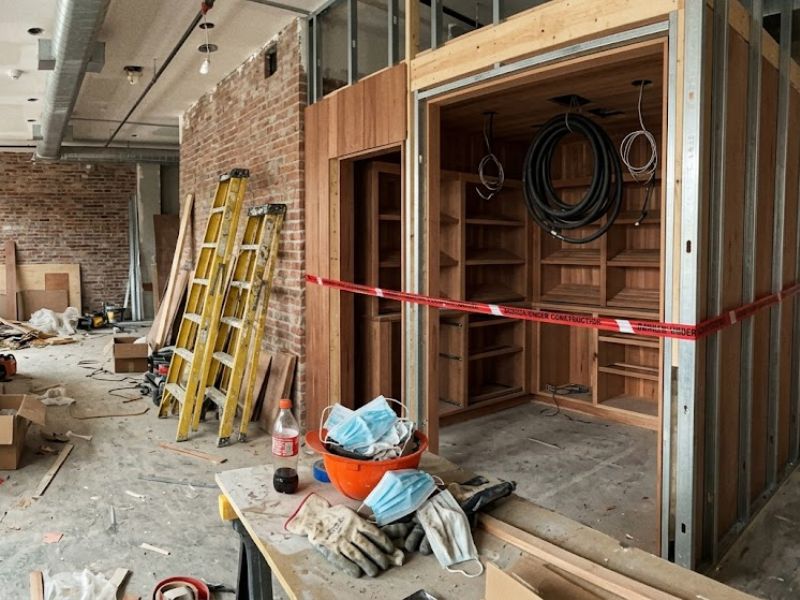
Building a walk-in humidor is not just about framing a room and lining it with Spanish cedar. That is the visible layer, but the real work happens behind the walls and in the air. A proper build requires coordination between insulation, vapor barriers, sealing techniques, humidification systems, and airflow management. If any of those elements are off, the entire system becomes unstable. For example, even a small gap in a vapor barrier can allow moisture to escape or outside air to enter, forcing your humidification system to overwork and creating inconsistent conditions across the room.
There is also the matter of material behavior. Spanish cedar is widely used for a reason, but it expands and contracts depending on humidity levels. If it is installed without accounting for that movement, you can end up with warping, gaps, or structural stress over time. The same applies to doors, shelving systems, and lighting fixtures. Everything inside a walk-in humidor must be selected and installed with the environment in mind. This is why experienced builders approach these projects more like climate-controlled systems rather than simple construction jobs.
Airflow is another overlooked factor. Many assume that as long as humidity levels are correct, the job is done. In reality, stagnant air can create microclimates within the humidor. Some areas may hold excess moisture while others dry out. This is where proper circulation design becomes critical. Even pairing air purification with smoke eaters plays a role in maintaining a clean environment, especially in lounges where the humidor is accessed frequently. Clean air supports both preservation and overall user experience.
The complexity of these systems is exactly why the decision between professional and DIY matters. It is not just about skill level. It is about understanding how all these variables interact over time, not just on day one when everything appears to be working.
Professional Walk-In Humidor Builders: What They Actually Do

Hiring a professional to build a walk-in humidor goes far beyond construction. A true specialist approaches the project as a complete system design. That starts with evaluating the space itself. Room size, location within the building, external walls, and even foot traffic patterns all influence how the humidor should be built. Professionals consider how external temperature fluctuations might affect internal stability and plan insulation and sealing accordingly.
They also bring structured processes to the table. Instead of guessing or adapting on the fly, professional builders typically follow a sequence that ensures consistency and performance:
- Site evaluation and environmental assessment
- Material selection based on usage and scale
- Sealing and vapor barrier installation
- Climate control system integration
- Interior finishing with expansion allowances
- Testing and calibration before use
This level of planning reduces the risk of long-term issues. It also ensures that the humidor performs evenly across all areas, which is especially important for retail or lounge environments where inventory turnover and presentation matter.
Another advantage is access to commercial-grade equipment and proven systems. Professionals know which humidifiers are appropriate for different room sizes and how to position them for maximum efficiency. They also understand how to integrate airflow solutions without disrupting the aesthetic of the space. In more advanced setups, this includes coordinating with broader smoke control strategies so the humidor remains a clean, stable environment even in high-traffic cigar lounges.
Here is a simple comparison to illustrate the difference between professional builds and DIY approaches:
| Factor | Professional Build | DIY Build |
|---|---|---|
| Climate stability | Consistent and calibrated | Often fluctuates |
| Material installation | Precision fitted with expansion allowance | Risk of warping or gaps |
| Airflow management | Designed and tested | Frequently overlooked |
| Long-term reliability | High | Variable |
| Initial cost | Higher | Lower upfront, higher correction cost |
The upfront investment in a professional build often prevents significantly higher costs later. Issues like mold remediation, structural corrections, or system replacements can quickly outweigh the savings of doing it yourself.


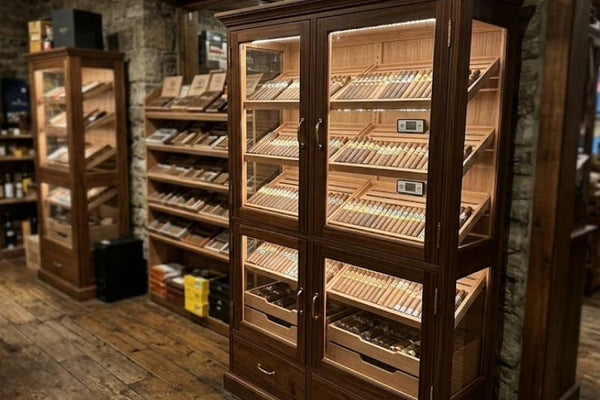
Photo Credit to our friends at Chino, CA, at Blazers Smoke Shop III.