
Key Takeaways
- Electric humidors offer automated humidity and temperature control, making them ideal for businesses that need consistent cigar preservation with minimal manual effort.
- Traditional humidors provide a classic, cost-effective storage solution, but they require regular monitoring and maintenance to maintain optimal conditions.
- Business size and inventory value should influence the decision, as larger or higher-value collections often benefit more from electric humidors.
- Climate and environmental conditions play a major role in performance, with electric humidors better equipped to handle temperature and humidity fluctuations.
- The right humidor protects product quality, customer satisfaction, and brand reputation, making it an important long-term investment for cigar-focused businesses.
Cigar storage is no longer just a personal hobby issue. For lounges, tobacco retailers, hotels, golf clubs, and premium gifting companies, the right humidor directly affects product quality, customer satisfaction, and long-term operating costs. Choosing between an electric humidor and a traditional humidor can influence how consistently cigars are preserved, how much maintenance your team handles, and how scalable your storage system becomes as inventory grows.
Businesses today also face changing customer expectations. Buyers want perfectly maintained cigars with consistent flavor, aroma, and freshness every time. That means storage reliability matters more than ever. Whether you operate a small cigar retail space or manage large commercial inventory, understanding the strengths and limitations of each humidor type helps you make a smarter investment.
Quick answer: An electric humidor is usually the better choice for businesses that need automated humidity control, temperature stability, and lower daily maintenance. A traditional humidor can still work well for smaller collections, stable indoor environments, or businesses that prioritize classic presentation and lower upfront cost.
Understanding How Traditional Humidors Work

A traditional humidor is the classic cigar storage solution most cigar enthusiasts recognize immediately. These humidors usually rely on Spanish cedar interiors combined with passive humidification systems such as foam, beads, or gel packs. The goal is to maintain stable humidity levels, typically between 65% and 72%, without using powered cooling or automated climate controls.
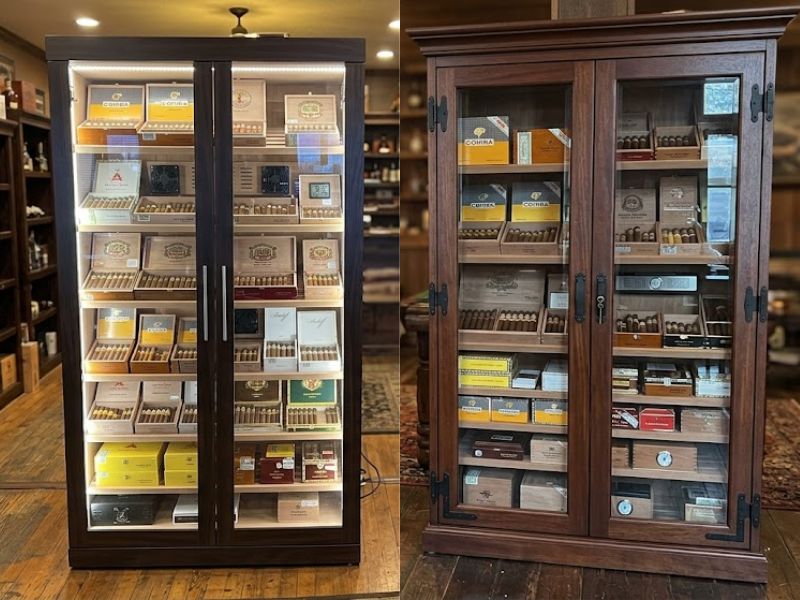
For many businesses, traditional humidors offer a sense of craftsmanship and heritage that aligns well with luxury branding. A beautifully built wooden humidor displayed in a retail environment creates an upscale experience customers appreciate. This visual appeal can strengthen premium positioning, especially in cigar lounges, private clubs, or boutique tobacco stores.
Traditional humidors are also relatively affordable upfront. Smaller businesses often prefer them because they require less initial capital compared to electric models. There are no compressors, cooling systems, or digital control panels to maintain. In locations with stable room temperatures and moderate climate conditions, traditional humidors can perform reliably with proper care.
Still, passive humidity management requires attention. Staff must monitor humidity regularly, refill humidification systems, and avoid rapid environmental changes. Inconsistent maintenance can lead to dry cigars, mold growth, or tobacco beetle infestations. For businesses managing larger inventories, this manual oversight can become time consuming and costly over time.
Another consideration is environmental sensitivity. Traditional humidors depend heavily on the room around them. If your retail space experiences fluctuating temperatures, direct sunlight, or seasonal dryness, maintaining stable cigar conditions becomes harder. Businesses operating in hot or humid regions may struggle to achieve consistent preservation without additional climate control solutions.
What Makes Electric Humidors Different?

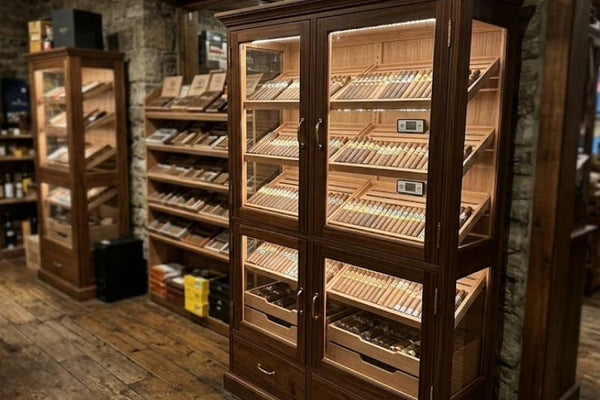
Electric humidors use powered climate systems to regulate humidity and, in many cases, temperature as well. Unlike passive systems, electric humidors automate much of the cigar preservation process. They often include digital displays, humidity sensors, cooling mechanisms, and circulation fans designed to create stable internal conditions with minimal manual intervention.
For B2B operations, this automation can significantly reduce labor demands. Employees spend less time adjusting humidity packs or manually checking moisture levels. Instead, the humidor continuously monitors conditions and self adjusts when necessary. This consistency is especially valuable for businesses with high inventory turnover or expensive premium cigar collections.
Electric humidors are particularly useful in environments where external temperatures fluctuate throughout the year. Restaurants, hotels, and retail stores often experience varying indoor conditions due to customer traffic, air conditioning cycles, and seasonal weather changes. An electric humidor helps minimize these external impacts and creates a more predictable storage environment.
Another major advantage is scalability. Larger electric humidors can store hundreds or even thousands of cigars while maintaining even humidity distribution. Businesses planning inventory expansion often find electric models easier to manage over the long term because the system does not rely as heavily on manual balancing across storage zones.
Modern electric humidors also support a more professional operational image. Customers increasingly associate digital monitoring and precision control with premium care standards. A sleek electric unit displayed in a cigar lounge or retail showroom can reinforce trust and demonstrate commitment to product quality.
That said, electric humidors involve higher initial costs and require electricity to operate continuously. Businesses should also consider maintenance for electronic components and cooling systems. While these systems are generally reliable, repairs can be more expensive than maintaining traditional humidors.
Electric Humidor vs Traditional Humidor: Side by Side Comparison

| Feature | Electric Humidor | Traditional Humidor |
|---|---|---|
| Humidity Control | Automated and precise | Manual or passive |
| Temperature Regulation | Usually included | Dependent on room conditions |
| Maintenance Needs | Lower daily oversight | Frequent monitoring required |
| Initial Cost | Higher | Lower |
| Scalability | Excellent for large inventory | Better for smaller collections |
| Energy Usage | Requires electricity | No electricity needed |
| Visual Appeal | Modern and sleek | Classic and handcrafted |
| Best Environment | Fluctuating climates or larger commercial settings | Stable indoor environments or smaller collections |
| Best For | Retailers, lounges, hotels | Boutique shops, collectors |
Which Humidor Is Better for Retail Businesses?
Retail businesses often need to balance presentation, inventory protection, and operational efficiency. In this environment, electric humidors frequently provide stronger long term value despite the higher upfront investment.
One reason is inventory consistency. Customers purchasing premium cigars expect reliable freshness every time. Electric humidors reduce the risk of uneven humidity levels that can damage cigars or alter flavor profiles. For stores with significant daily customer traffic, maintaining consistency becomes critical for repeat business and brand reputation.
Electric models also simplify employee training. Instead of teaching staff complex humidity management techniques, businesses can rely on automated systems with digital readings. This reduces operational errors and lowers the chance of accidental inventory damage caused by neglect or inexperience.
Traditional humidors still have a place in retail, especially for boutique cigar shops focused on aesthetics and craftsmanship. A handcrafted wooden humidor creates a warm, authentic atmosphere many customers appreciate. Smaller retailers with limited inventory may find traditional systems perfectly manageable, particularly in climate controlled environments.
Businesses should also think about future growth. Expanding inventory inside a passive humidor system often increases maintenance complexity. Electric systems generally scale more efficiently because they maintain stable conditions across larger storage capacities.
At Your Elegant Bar, we often see businesses choose electric humidors when they want dependable performance with less daily oversight. At the same time, some premium retailers still prefer traditional humidors because they complement the luxury experience customers expect. The right choice depends heavily on operational priorities, climate conditions, and growth plans.
Cost Considerations Beyond the Purchase Price

Many buyers focus too heavily on the initial price tag without evaluating long term ownership costs. A traditional humidor may seem more affordable at first, but ongoing maintenance demands can add hidden expenses over time.
For example, passive humidification systems require regular replacement materials and staff attention. If humidity fluctuates frequently, businesses may lose product quality or inventory value. Even minor cigar degradation can impact customer satisfaction and repeat purchases.
Electric humidors usually cost more initially, but they can reduce labor and inventory risks. Stable climate control lowers the chance of cigar drying, cracking, or mold issues. Businesses storing high value cigars often view this reliability as protection for their investment rather than just a convenience feature.
Energy usage is another factor. Modern electric humidors are generally energy efficient, but operating costs still exist. Businesses should compare electricity consumption with the potential labor savings and reduced product waste.
Here are a few financial factors businesses should evaluate before purchasing:
- Inventory value being protected
- Staff time required for maintenance
- Local climate conditions
- Expected business growth
- Potential product loss from humidity inconsistency
For high volume cigar operations, automation often offsets higher equipment costs surprisingly quickly.
Climate and Location Matter More Than Many Buyers Realize

Your geographic location can strongly influence which humidor type performs best. Businesses in dry regions often struggle with traditional humidors because passive systems lose moisture rapidly. Constant refilling and monitoring become necessary to avoid cigar damage.
Hot and humid climates create a different challenge. Excessive humidity increases mold risks and can encourage tobacco beetle activity. Electric humidors with temperature regulation help stabilize conditions and reduce these environmental threats.
Businesses operating in multiple locations should pay especially close attention to climate differences. A traditional humidor that performs well in one city may struggle in another with different humidity patterns. Standardizing operations across locations often becomes easier with electric systems because environmental variables are controlled more consistently.
Indoor conditions matter too. Retail stores with frequent door openings, large windows, or aggressive air conditioning systems can experience significant humidity swings throughout the day. These fluctuations may stress passive humidification systems and lead to uneven cigar aging.
At Your Elegant Bar, we usually recommend evaluating the actual operating environment before selecting a humidor model. Businesses sometimes underestimate how much local climate impacts cigar preservation. The ideal storage solution in a stable private office may not work nearly as well inside a busy hospitality venue.
Maintenance Expectations for Both Humidor Types

Every humidor requires some level of maintenance, but the type of work differs significantly between traditional and electric models. Understanding these differences helps businesses prepare for the operational realities of ownership.
Traditional humidors demand more hands-on attention. Staff typically need to:
- Monitor humidity levels manually
- Refill humidification devices
- Season cedar interiors periodically
- Rotate inventory for even moisture exposure
For smaller operations, these tasks may feel manageable and even enjoyable. In larger businesses, however, manual oversight can become inconsistent if employees are busy handling customers or inventory management.
Electric humidors simplify many of these responsibilities through automation. Digital sensors continuously track humidity and temperature while internal systems adjust conditions automatically. Maintenance usually focuses more on occasional cleaning, water reservoir refills, and ensuring ventilation systems remain unobstructed.
One issue businesses sometimes overlook is technical support. Electric humidors contain electronic components that may eventually require servicing. Choosing reputable manufacturers with reliable warranty coverage becomes important for minimizing downtime.
Traditional humidors are mechanically simple, which means fewer parts can fail. Their longevity often appeals to businesses that prefer straightforward equipment without electronic dependencies. Some high quality wooden humidors can last decades with proper care.
The right maintenance balance depends on how much operational involvement your business wants to manage daily.
Choosing the Right Humidor for Your Business Goals

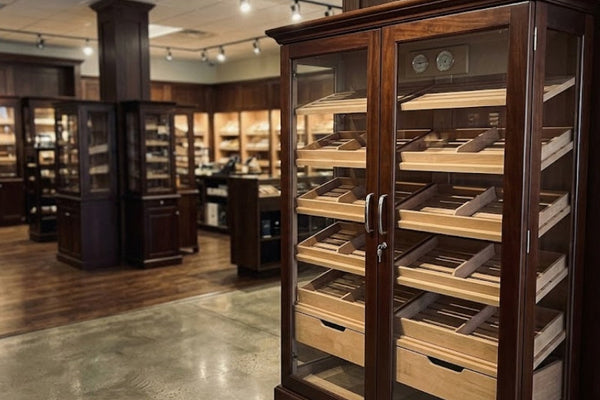
Photo credit: Oscar’s Cigar Lounge in Palmyra, PA, featuring premium cigar lockers from Your Elegant Bar
Selecting the right humidor starts with understanding your operational needs, inventory size, customer expectations, and growth plans. A traditional humidor may be an excellent choice for businesses that prioritize classic presentation, craftsmanship, and smaller cigar inventories. On the other hand, an electric humidor can provide the automated climate control and storage capacity needed for retailers, cigar lounges, hotels, golf clubs, and other businesses managing larger collections or operating in environments with fluctuating temperatures and humidity levels.
The best solution is not always the most expensive one. It is the humidor that fits your specific business requirements while protecting cigar quality and supporting a consistent customer experience. Factors such as available space, maintenance preferences, local climate, and projected inventory growth should all play a role in the decision-making process.
At Your Elegant Bar, we help retailers, lounges, hospitality venues, and cigar-focused businesses choose humidor solutions based on inventory size, climate conditions, maintenance preferences, display goals, and long-term growth plans. Our selection includes traditional cigar humidor cabinets, electric humidors, humidification systems, smoke eaters, and essential cigar accessories for commercial and hospitality environments.
Need help choosing the right electric or traditional humidor for your business, inventory, and budget? Speak with our team and get expert guidance on finding the ideal humidor solution for your needs!
Frequently Asked Questions
1. What is the main difference between an electric humidor and a traditional humidor?
An electric humidor uses powered systems to regulate humidity and often temperature, while a traditional humidor relies on passive humidification and stable room conditions. Electric humidors usually require less daily monitoring, while traditional humidors offer a more classic and lower-cost storage option.
2. How long do cigars stay fresh in an electric humidor?
When properly maintained, an electric humidor can keep cigars fresh for several years by consistently controlling humidity and temperature levels.
3. Is an electric humidor worth the higher cost for a business?
For businesses storing valuable inventory or large cigar collections, the improved consistency, reduced maintenance, and lower risk of product loss often justify the investment.
4. Can a traditional humidor maintain the same quality as an electric humidor?
Yes, a high-quality traditional humidor can preserve cigars very well, but it requires regular monitoring and stable room conditions to achieve consistent results.
5. What humidity level is best for storing cigars?
Most cigar professionals recommend maintaining a relative humidity level between 65% and 72% to preserve flavor, aroma, and overall cigar quality.
6. Which humidor is better for commercial cigar retailers?
Electric humidors are generally better for commercial retailers because they provide automated climate control, support larger inventories, and reduce daily maintenance requirements.