
For retailers, lounges, hospitality venues, and specialty tobacco businesses, humidor selection has a direct impact on product quality, customer satisfaction, and operational efficiency. Many companies begin with a desktop humidor because it is affordable, compact, and easy to manage. As inventory grows and customer demand increases, however, storage requirements often change.
The decision to move from a desktop humidor to a cabinet humidor is not simply about capacity. It also involves workflow, inventory management, presentation, and long-term business goals. Understanding the strengths and limitations of each option helps business owners make a practical investment that protects product quality while supporting future growth.
Quick answer: A business should upgrade from a desktop humidor to a cabinet humidor when inventory growth, product variety, customer demand, or presentation needs exceed what a smaller unit can support. Cabinet humidors are especially useful for retailers, lounges, hotels, and hospitality venues that need more capacity, better organization, stronger merchandising, and more consistent humidity control.
Understanding the Role of a Desktop Humidor

A desktop humidor is often the starting point for many businesses entering the premium cigar market. These units are designed to store a relatively small quantity of cigars while maintaining stable humidity levels.
Their compact footprint makes them attractive for bars, restaurants, hotel lounges, and retail shops that want to offer a curated selection without dedicating significant floor space to storage. For businesses testing demand or building a new customer base, a desktop humidor can provide an efficient and cost-effective solution.
One of the biggest advantages of a desktop humidor is simplicity. Maintenance is generally straightforward, inventory is easy to monitor, and the initial investment remains manageable.
Staff members can quickly learn proper humidity management procedures, reducing the risk of product damage caused by improper storage. Smaller storage volumes also make stock rotation easier, particularly for businesses that sell products quickly and replenish inventory frequently.
Despite these benefits, desktop humidors have natural limitations. Capacity becomes a concern as product offerings expand. Businesses that introduce multiple brands, sizes, and blends may find themselves struggling to organize inventory effectively. Overcrowding can affect airflow and humidity consistency, potentially creating storage issues that impact cigar quality.
Another consideration is customer perception. In premium retail environments, presentation matters. While a well-crafted desktop humidor can create an attractive display, it may not always communicate the same level of selection, professionalism, or expertise as a larger cabinet system.
Why Cabinet Humidors Appeal to Growing Businesses

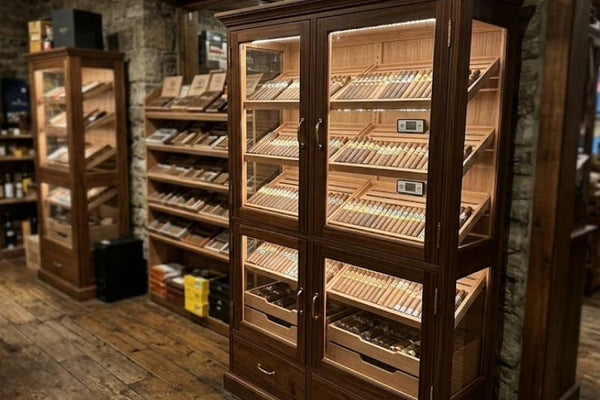
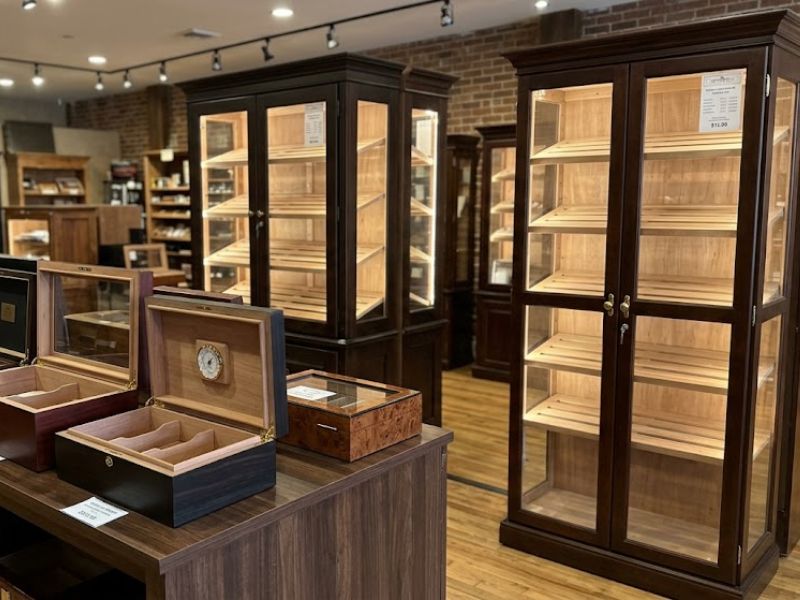
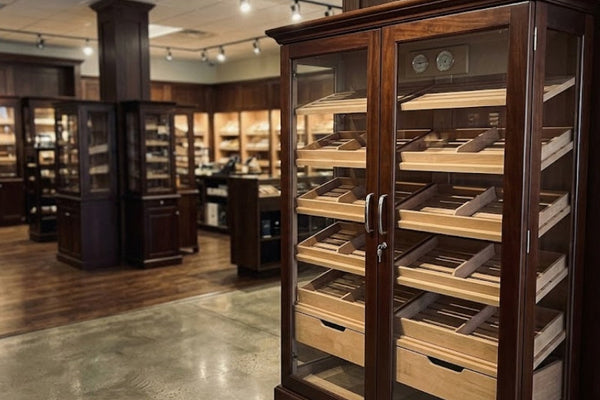
Cabinet humidors are designed for larger inventories and more demanding storage requirements. Unlike desktop units, cabinet models provide significant capacity while maintaining controlled environmental conditions across multiple shelves and compartments.
For businesses experiencing growth, this added space often becomes the most obvious advantage. Instead of limiting inventory decisions based on available storage, companies gain greater flexibility to expand product offerings and accommodate seasonal demand.
The benefits extend beyond capacity. Cabinet humidors support better inventory organization, allowing businesses to separate products by brand, strength, country of origin, or pricing category. This structure simplifies stock management and can improve operational efficiency.
From a sales perspective, cabinet humidors can also function as merchandising tools. Customers often associate larger humidors with broader selections and higher levels of expertise. A well-designed cabinet display encourages browsing and discovery, increasing opportunities for additional purchases.
Many newer cabinet humidors are also electric, offering enhanced humidity management systems. Larger units often incorporate advanced circulation technology and greater moisture stability, helping businesses maintain consistent conditions even when doors are opened frequently throughout the day. This reliability becomes particularly valuable in high-traffic environments where maintaining product integrity is essential for customer satisfaction and repeat business.
Comparing Desktop and Cabinet Humidors for B2B Operations

While both storage solutions serve important purposes, their suitability depends heavily on business requirements. Companies evaluating an upgrade should examine several operational factors rather than focusing solely on capacity. The right choice often reflects current sales volume, projected growth, and the role premium cigars play within the overall business model.
| Factor | Desktop Humidor | Cabinet Humidor |
|---|---|---|
| Storage Capacity | Limited | High |
| Floor Space Required | Minimal | Moderate to Large |
| Initial Investment | Lower | Higher |
| Product Organization | Basic | Advanced |
| Merchandising Potential | Moderate | Strong |
| Scalability | Limited | Excellent |
| Humidity Stability | Good for Small Collections | Better for Larger Inventories |
A business that carries a small, carefully selected assortment may continue operating successfully with a desktop humidor for years. On the other hand, a retailer planning to introduce new brands, increase stock levels, or develop a destination shopping experience will often benefit from the scalability offered by a cabinet unit.
Another important factor is staff workflow. As inventory grows, organizational challenges become more noticeable. Cabinet humidors often reduce operational friction by creating designated storage zones and improving product visibility. These efficiencies can save time daily, creating value that extends beyond storage capacity itself.
Key Signs That an Upgrade May Be Necessary
Many businesses wait too long before upgrading their humidor system. Because desktop humidors can continue functioning adequately even as inventory grows, the warning signs are sometimes subtle. Recognizing these indicators early can help prevent inventory management issues and cigar quality concerns before they become significant problems.
You may be ready to upgrade from a desktop humidor to a cabinet humidor if:
- Inventory consistently reaches maximum capacity.
- New product lines cannot be added without removing existing items.
- Staff struggles to organize or locate products efficiently.
- Humidity levels become harder to maintain because of overcrowding.
- Customers request products you cannot stock due to space limits.
- Expansion plans include increased cigar sales or a more premium presentation.
Growth often happens gradually, which can make storage limitations seem manageable in the short term. Over time, however, these small constraints can begin affecting revenue opportunities. Businesses may avoid carrying certain products, limit purchasing quantities, or miss opportunities to capitalize on customer demand.
Brand perception can also play a role. Businesses investing in premium experiences often discover that storage presentation contributes to customer confidence. A larger, professionally displayed inventory communicates commitment to quality and selection. This can be particularly important in hospitality settings where guests expect a refined environment that reflects attention to detail.